Specializing in all kinds of custom tarpaulins Custom Tarpaulin Product Manufacturers

 русский
 Français
News
 Home / News / Industry News / PVC vs TPU: Which Material Wins for Tarps, Truck Covers & Industrial Use?
  2026.10.09
 Industry News
Content
A logistics manager choosing between PVC and TPU tarpaulin materials usually has a specific pain point: the last tarps cracked in winter, or the cover is too heavy for drivers to fold, or a customer has asked for a material with a cleaner environmental profile. The short answer is that PVC remains the best all-round value for heavy-duty tarpaulins, truck covers and industrial curtains, while TPU earns its premium in ultra-cold, ultra-light or environmentally sensitive applications. To make the right call, you need to weigh seven factors: cost, weight, flexibility, abrasion resistance, chemical resistance, temperature range and recyclability. This guide compares each one against real operating conditions.
PVC (polyvinyl chloride) is the most widely used polymer in industrial tarpaulins. For fabric applications it is plasticized and coated onto a polyester scrim, which gives the sheet dimensional stability and tear resistance. A standard PVC tarpaulin for transport use weighs between 650 and 930 g/m², and the coating thickness determines its waterproofness and service life.
TPU (thermoplastic polyurethane) is an elastomer with a different molecular structure. It behaves like rubber, returns to shape after stretching, and requires no plasticizers to stay flexible. In tarpaulin form it is laminated or extruded as a film, usually onto a nylon or polyester substrate. TPU is more expensive per square meter, but it is also lighter for the same strength, which is why it dominates high-end inflatables, packrafts and foldable containers.
Both materials are weldable with hot air or radio frequency, both are fully waterproof, and both can be formulated as flame retardant. The useful comparison begins where their chemistry diverges.
The table below summarizes the differences that matter most in purchasing decisions.
| Property | PVC Tarpaulin | TPU Tarpaulin |
|---|---|---|
| Typical weight | 650–930 g/m² | 200–500 g/m² |
| Relative cost per m² | Baseline | 2–4 times higher |
| Low-temperature flexibility | Down to about −30 °C with special formulation | Down to about −50 °C |
| Abrasion resistance | Good; improves with coating thickness | Excellent; 2–5 times better than PVC |
| UV resistance | Very good with UV stabilizers | Moderate; requires protective additives |
| Oil and fuel resistance | Moderate | Excellent |
| Flame retardancy | Naturally self-extinguishing; FR grades available | Can be formulated FR; less common |
| Halogen content | Contains chlorine | Halogen-free |
| Typical outdoor service life | 5–10 years | 8–12 years |
Abrasion resistance is TPU's strongest technical advantage. In sliding-contact applications, such as conveyor skirts, inflatable boat floors, or the lower edges of side curtains that rub against trailer frames, TPU typically lasts two to five times longer than PVC. However, tarpaulin durability is not only about the polymer; it is about composite construction. A heavy PVC sheet with a high-density polyester scrim resists punctures, wind flapping and repeated folding far better than a thin TPU film.
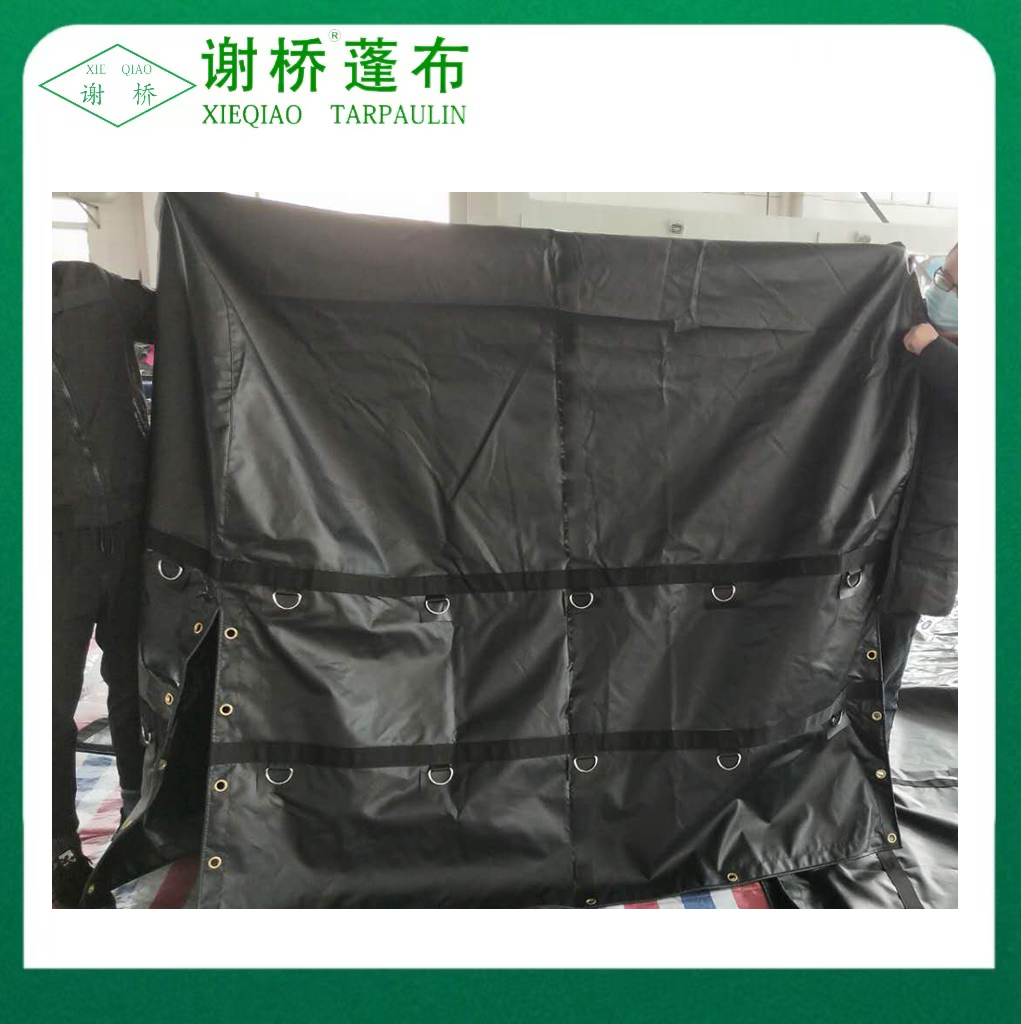
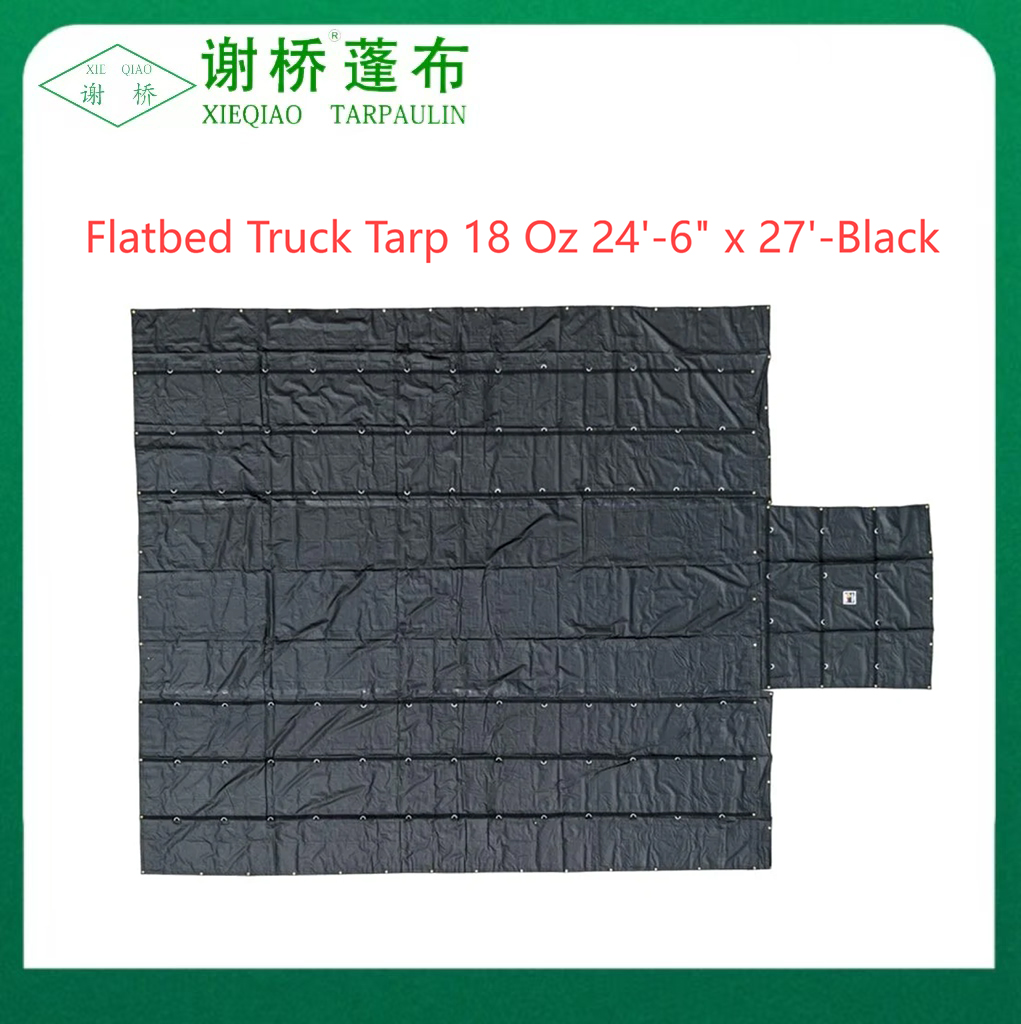
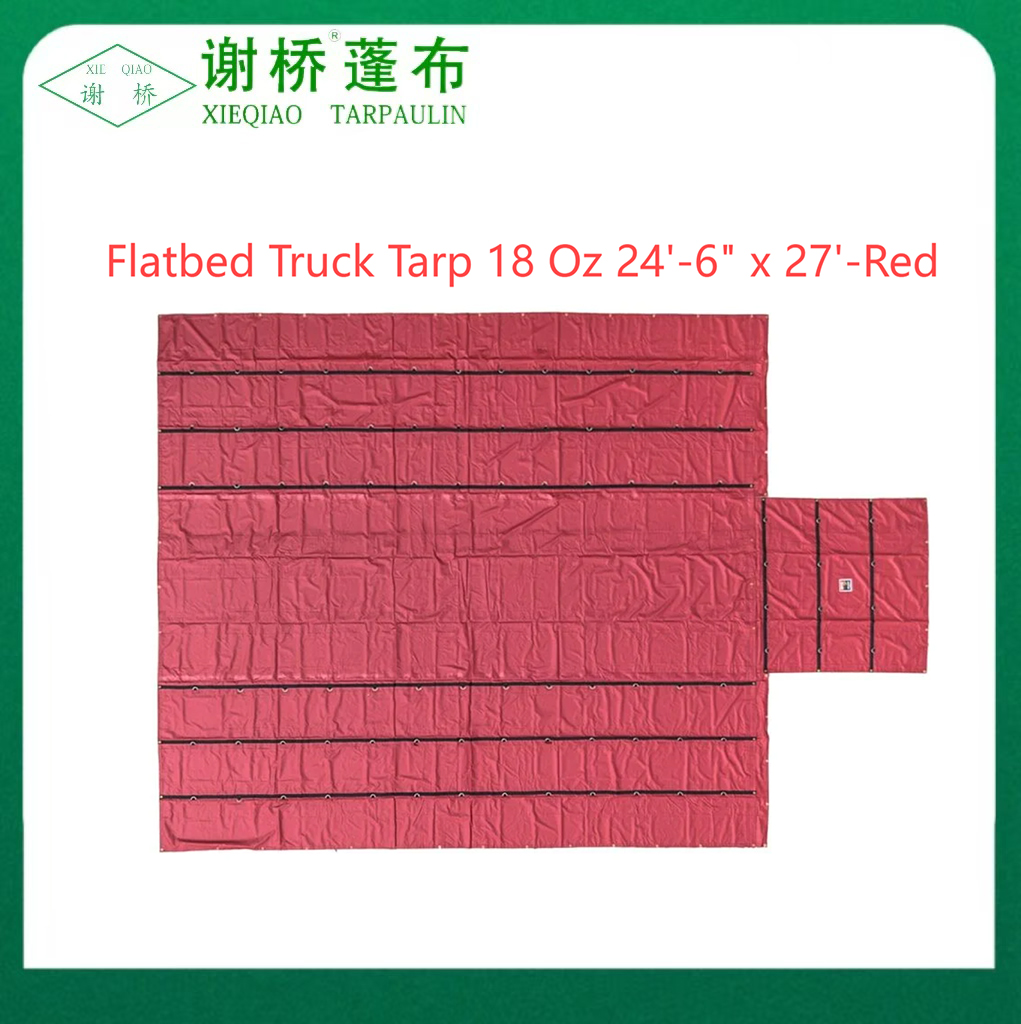
For flatbed truck tarps and open-top container covers, the heavier PVC construction also dampens vibration and lies flat against the load, which reduces edge abrasion from the start. A 100% waterproof UV-resistant PVC truck tarp in the 14–18 oz range is the standard choice for fleets because it balances tear strength, driver handling and replacement cost.
This is where many buyers make their final decision. Ordinary plasticized PVC stiffens noticeably below −10 °C, and folding a standard tarp in a freezing yard risks stress whitening or cracking along the crease. Specialty grades solve that problem: a cold-crack-resistant PVC tarpaulin can be handled down to −40 °C because its plasticizer system is optimized for low-temperature performance.
TPU goes further, staying flexible to about −50 °C without any plasticizer at all, which makes it the default for arctic logistics equipment, inflatable evacuation slides and winter rescue gear. If your operation never sees sustained temperatures below −20 °C, a properly formulated PVC tarpaulin will do the job at a fraction of the TPU cost.
TPU films are remarkably light. A TPU tarpaulin with comparable tensile strength to a 500 g/m² PVC sheet can weigh half as much, which matters for products carried by hand: portable shelters, kayak covers and emergency containment systems. In trucking, however, weight can be an advantage. An 18 oz flatbed truck tarp stays put in high winds, drapes cleanly over cargo and does not whip as much as lighter material. For fleets that want both strength and manageable handling, a 13–14 oz PVC tarp is the balance point used by most European and North American operators.
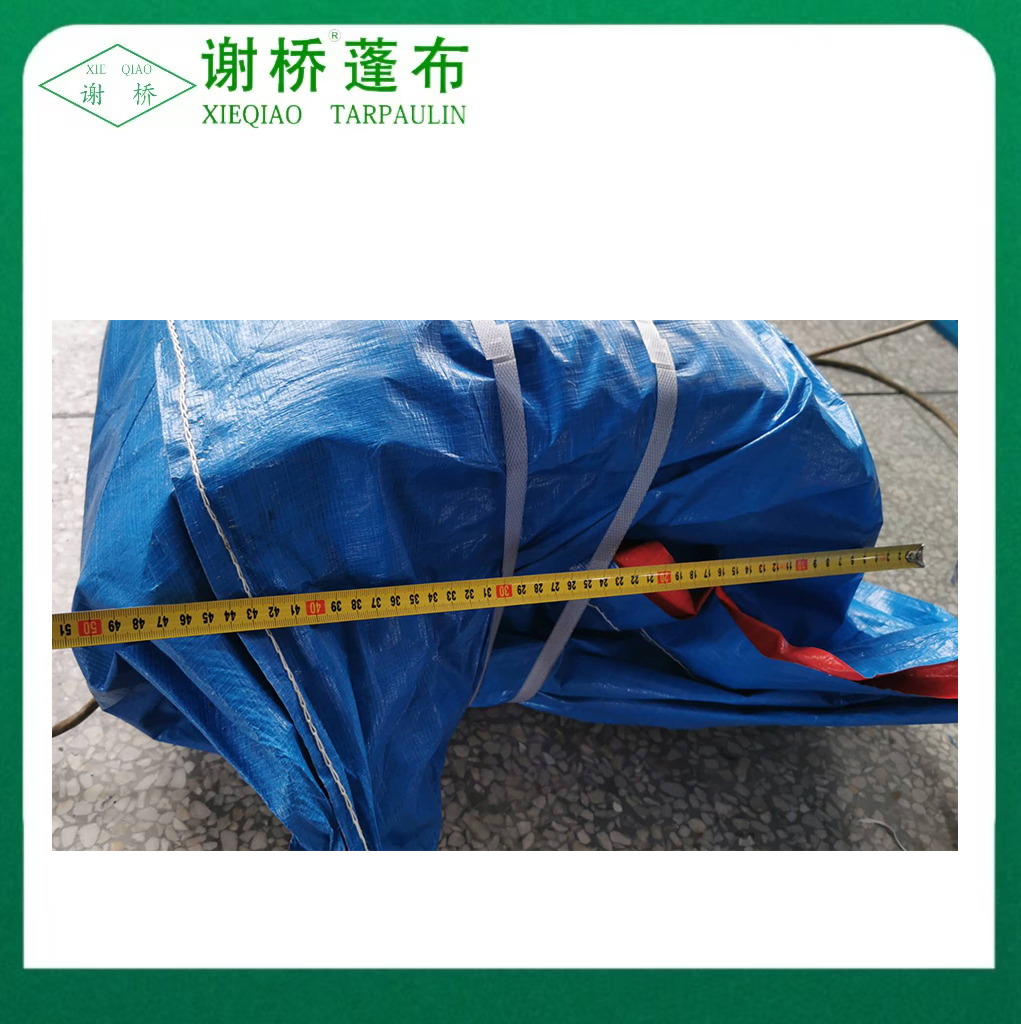 XieQiao Tarpaulin - Black Vinyl PVC Coated Polyester Flatbed Truck Tarp 20'x27'(8'DROP) Suppliers and Factory in China, Wholesale Black ...View Product →
PVC contains roughly 57% chlorine and requires plasticizers for flexibility. Older formulations sometimes used phthalates or heavy-metal stabilizers, which triggered restrictions under regulations such as RoHS and REACH. Modern tarpaulin-grade PVC is manufactured with non-phthalate plasticizers and lead-free stabilizers, and it can be recycled mechanically, although the recycling stream remains smaller than for commodity plastics. Burning PVC releases hydrogen chloride gas, so fire-safety installations usually specify FR-rated grades.
TPU is halogen-free, burns with lower smoke toxicity, and can be reground and re-extruded without migrating plasticizers, which makes it attractive for enclosed spaces and consumer-facing products. However, for large-area applications such as construction screening, agricultural covers and container tarps, the environmental gap narrows because long service life and repairability matter more than the base polymer's disposal profile. Compare both options on a life-cycle basis rather than on the material chemistry alone.
TPU resin costs roughly two to four times more than PVC resin per kilogram, and TPU film production is slower, so a TPU tarpaulin can cost three times more than an equivalent PVC sheet. In return, you get a longer service life in high-flex and cold applications, which can lower the cost per year of use.
For static covers, truck tarps, building protection and storage curtains, a well-made PVC tarpaulin usually delivers the lowest total cost over a 5–10 year period, partly because surface wear is easy to patch. The practical approach is to compare price per square meter, expected years of service and repair cost, not just the initial quote.
Choose PVC when:
Choose TPU when:
From a manufacturer's perspective, our workshop regularly builds custom-shaped PVC waterproof covers for machinery, grain storage, boats and specialized equipment. When clients ask whether they should switch to TPU, the answer is usually no for large-area transport and construction protection, and yes for small, high-value flexible products where performance justifies the premium. For fleets running European trailers, our 13.75 m truck side curtain tarpaulin is a proven heavy-duty PVC solution. If you are still deciding, send us the operating environment and dimensions; we will recommend a specification and provide fabric samples for your own cold-flex and abrasion tests.
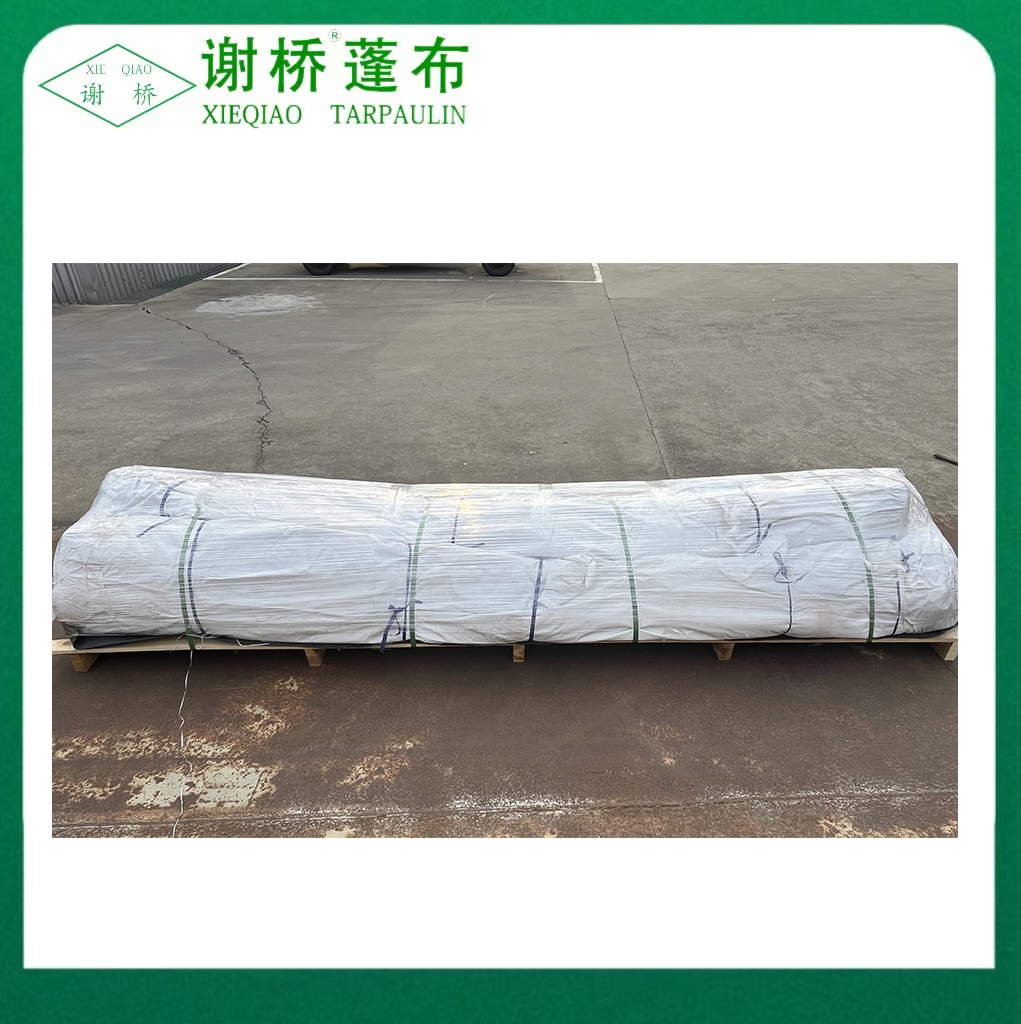 13.75m Truck Side curtain Tarpaulin Flatbed Rolling Tarp Suppliers, Factory - YaXieQiao Tarpaulin - 13.75m Truck Side curtain Tarpaulin Flatbed Rolling Tarp Suppliers and Factory in China, Wholesale 13.75m Truck Side ...View Product →
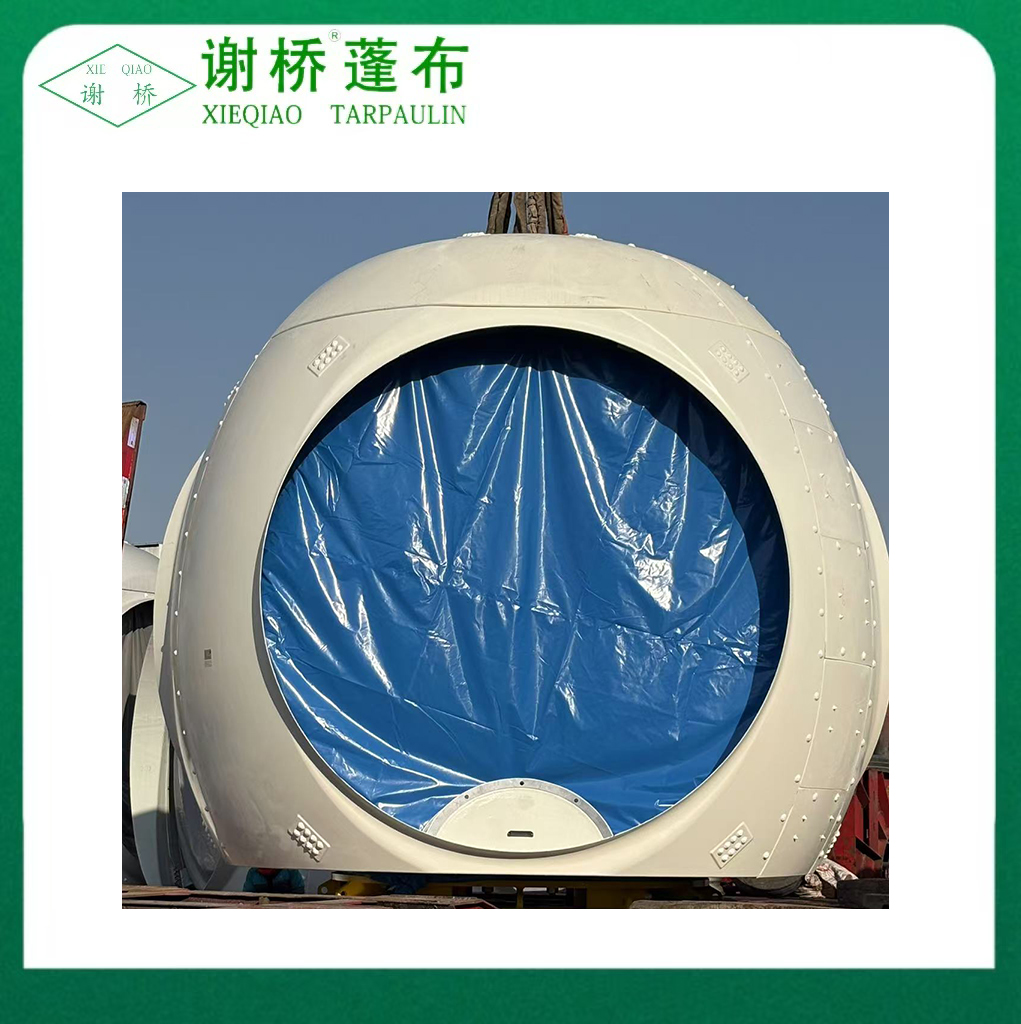 Waterproof Protection Custom Shape PVC Coated Vinyl Material Tarp cover SupplierXieQiao Tarpaulin - Waterproof Protection Custom Shape PVC Coated Vinyl Material Tarp cover Suppliers and Factory in China, Wholesale Wat...View Product →
PVC and TPU are not rivals in the same price class; they serve different tiers of the same need. PVC covers roughly 90% of industrial tarpaulin requirements at the lowest possible cost. TPU is the specialist material for extreme conditions, weight-sensitive designs and strict environmental programs. Match the material to the task, and you will avoid both premature failure and unnecessary spending.
Recommended Products



 The Industrial Park of Wuqiao Town, Jiangdu District, Yangzhou City, Jiangsu Province, China.
  +86-15252561063
  +86-15252561063
  [email protected]