Specializing in all kinds of custom tarpaulins Custom Tarpaulin Product Manufacturers

 русский
 Français
News
 2026.03.05
 Industry News
Content
Waterproof tarpaulins have always been workhorses of industry — covering cargo, protecting construction sites, sheltering equipment, and serving as temporary structures in every climate on earth. But as global infrastructure grows more complex and the physical demands on protective covers become more varied, the specification and selection of waterproof tarpaulin has become a more technical decision than it once was. PVC-coated tarpaulin, in particular, has moved far beyond its origins as a simple sheet of coated fabric. Today it is a precision-engineered material used in logistics, agriculture, events, disaster relief, military applications, and — increasingly — in the protection of sensitive technology infrastructure. This article examines the practical realities of waterproof tarpaulin selection, covering material construction, performance specifications, application-specific requirements, and the emerging role of high-performance covers in protecting the physical hardware that drives digital industries.
Not all waterproof tarpaulins are created equal, and the performance gap between a budget polyethylene sheet and a high-grade PVC-coated fabric tarpaulin is significant. Understanding the construction layers of a quality tarpaulin helps buyers match the right product to the application's actual demands rather than defaulting to the cheapest option and discovering its limitations in the field.
A PVC tarpaulin is a composite material built around a woven base fabric — typically high-tenacity polyester or nylon yarn — that provides tensile strength and dimensional stability. This base fabric is coated on both sides with PVC compound, which provides waterproofing, UV resistance, and abrasion resistance. The quality of the finished tarpaulin depends on the yarn denier and weave density of the base fabric, the thickness and formulation of the PVC coating, the adhesion between the coating and the fabric, and the quality of edge finishing, seaming, and eyelet installation. A tarpaulin that delaminates after six months of outdoor exposure — allowing water to penetrate between the coating and the fabric — has failed at the coating adhesion stage regardless of how waterproof the PVC compound itself is.
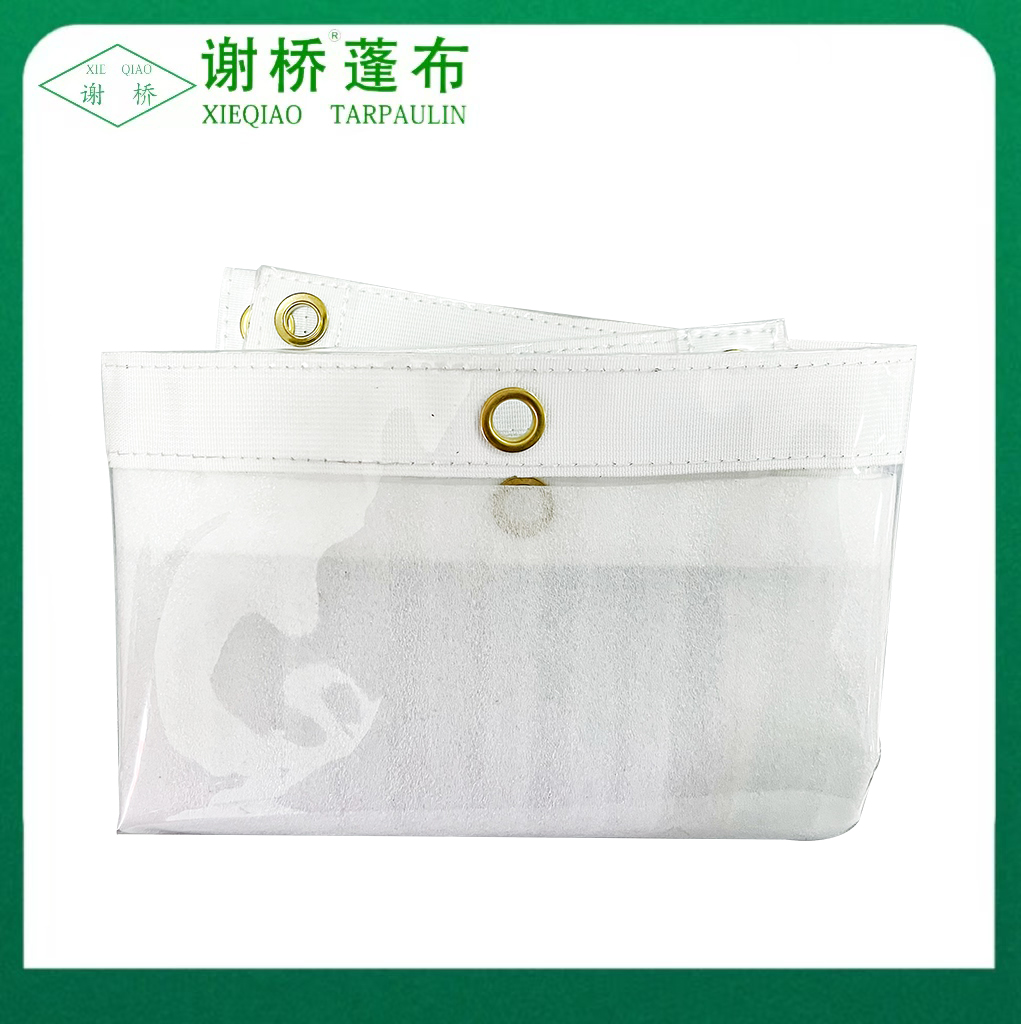
The weight of a PVC tarpaulin, expressed in grams per square meter (gsm), is a practical proxy for overall material quality and durability. Lightweight covers in the 300–450 gsm range are suitable for temporary or light-duty use. Medium-weight covers at 500–650 gsm cover the majority of transport, construction, and agricultural applications. Heavy-duty covers at 700–1,000 gsm and above are used in demanding industrial, military, and permanent installation applications where long service life and resistance to mechanical damage are priorities.
When sourcing waterproof tarpaulin for any serious application, the following performance parameters should be evaluated and confirmed against the supplier's test data — not simply accepted on the basis of marketing claims:
| Specification | Test Standard | Typical Range (PVC Tarpaulin) | Why It Matters |
| Waterproofness (hydrostatic head) | ISO 811 / EN 20811 | 1,500 – 5,000+ mm H₂O | Confirms resistance to water penetration under pressure |
| Tensile strength (warp/weft) | ISO 1421 | 1,500 – 6,000 N/5 cm | Determines load-bearing and tear resistance |
| Tear resistance | ISO 4674 | 200 – 800 N | Resistance to propagation of cuts or punctures |
| UV resistance | ISO 4892 / Xenon arc test | 500 – 2,000+ hours to significant degradation | Determines outdoor service life before embrittlement |
| Cold flexibility | EN 1876 | −20°C to −40°C (no cracking) | Essential for use in cold climates or refrigerated transport |
| Flame retardancy | DIN 4102-B1 / EN 13501-1 | B1 or B2 classification | Required for events, public buildings, and enclosed spaces |
Hydrostatic head testing is particularly important for buyers who need assurance against pooling water penetration — for example, tarpaulins used as temporary roofing, pond liners, or covers for stored goods exposed to prolonged rain. A hydrostatic head of 1,500 mm H₂O means the material can withstand a column of water 1.5 meters high before leakage begins. For most outdoor covering applications, a minimum of 2,000 mm H₂O is a reasonable threshold; for applications involving standing water or continuous submersion, ratings of 5,000 mm or higher should be specified.
Truck and trailer curtainsider covers are one of the highest-volume applications for PVC tarpaulin globally. These covers must withstand constant mechanical stress from highway vibration, buffeting from wind at speeds above 100 km/h, repeated folding and unfolding during loading, and exposure to road salt, fuel, and oil contamination. Tarpaulins for transport use are typically in the 650–900 gsm range, constructed with high-tenacity polyester yarn, and finished with anti-drip coatings that prevent water from collecting in surface depressions and dripping into the cargo during loading. Curtainsider tarpaulins are further required to meet European road safety reflectivity standards and, in many logistics contracts, to carry anti-theft reinforcement in the form of additional stitched webbing or steel cable inserts.
Construction applications demand tarpaulins that can serve as scaffold sheeting, debris containment, temporary weather enclosures, and ground protection simultaneously. Scaffold sheeting must be flame-retardant (typically DIN 4102 Class B1 or equivalent), sufficiently permeable to wind to avoid acting as a sail and overloading the scaffold structure, or alternatively designed with deliberately weakened wind panels that open under high-pressure conditions. For ground and building material protection, heavier grades of 500–700 gsm with reinforced edge hems and high-tensile eyelets at 50–100 cm spacing are standard. UV stabilization is critical for construction tarpaulins that may remain in place for months or years on long-duration projects.
Agricultural tarpaulins covering silage clamps, grain stores, and hay bales must balance waterproofing with specific requirements that differ from industrial covers. Silage covers, for example, require low oxygen permeability to prevent aerobic spoilage of the fermented material, along with UV resistance and flexibility at temperatures down to −20°C or lower in northern climates. Anti-condensation surfaces — textured or treated to prevent drip formation on the underside of the tarpaulin — are valued in grain storage applications where water drip onto dry grain can initiate mold growth. Agricultural tarpaulins are also increasingly specified with color-coded or printable surfaces to support inventory and contamination control systems on large farms.
Events and temporary structures represent one of the most demanding end-use categories for waterproof tarpaulin because the material must be simultaneously aesthetic, lightweight enough for rapid deployment, and compliant with strict fire safety regulations. PVC tarpaulins used in marquees, festival canopies, and exhibition structures in Europe must typically meet EN 13501-1 Euroclass B-s2,d0 or higher fire classification, confirming that the material does not significantly contribute to fire spread. Welded seams — achieved by high-frequency (HF) welding or hot-air welding — are required in tensile structure applications because stitched seams are not waterproof under tension. The aesthetic quality of the PVC surface, including color uniformity and resistance to discoloration, is also a specification point for events where the tarpaulin is visible to the public.
One of the most significant growth areas for high-specification waterproof tarpaulin is in the protection of outdoor and semi-outdoor technology infrastructure — data centers, telecommunications equipment, temporary AI computing installations, and edge computing nodes deployed in locations that lack permanent weatherproof enclosures. As the global rollout of AI computing accelerates and data processing moves closer to the edge of networks, more hardware is being deployed in temporary, modular, or containerized formats where weatherproof covers play a direct protective role.
AI data centers and server infrastructure generate significant heat and require careful management of airflow, cooling, and moisture exclusion simultaneously. Tarpaulins used to enclose or partially shelter outdoor server containers must be selected for extremely low moisture vapor transmission, resistance to condensation formation on the inner surface, and compatibility with the metal and painted surfaces of server hardware — some plasticizers in lower-grade PVC can migrate and contaminate sensitive electronics over time. Anti-static PVC tarpaulins, which dissipate electrostatic charge rather than accumulating it, are specified for direct contact with electronic equipment to prevent electrostatic discharge damage.
Telecommunications base stations, 5G antenna arrays, and outdoor edge computing nodes are increasingly covered with custom-fabricated PVC tarpaulin enclosures during installation, maintenance, and temporary relocation. These covers must accommodate irregular shapes, provide weatherproof protection during work that may span multiple days, and resist the wind loads present at elevated mounting positions on towers and rooftops. Custom fabrication — using cut-and-weld PVC tarpaulin with integrated tie-down systems, Velcro closures, and access panels — has become a standard service offering from specialist tarpaulin manufacturers serving the telecommunications infrastructure sector.
With a global market flooded with tarpaulins at every price point, distinguishing genuinely high-performance products from those that meet specifications only on paper requires a structured approach to supplier evaluation. The following checklist covers the most important points:
PVC tarpaulin has historically been associated with end-of-life disposal challenges due to the difficulty of recycling composite materials and the presence of plasticizers and stabilizers that complicate mechanical recycling processes. Leading manufacturers have responded to growing buyer pressure on sustainability by developing take-back and recycling programs for used tarpaulin, producing grades made with phthalate-free plasticizers compliant with REACH regulation restrictions, and offering bio-based or recycled-content PVC compounds as alternatives to virgin material in standard grades.
For buyers with sustainability reporting obligations, specifying tarpaulins that carry documented environmental product declarations (EPDs), REACH compliance certificates, and manufacturer recycling program participation provides the documentation trail needed for supply chain sustainability reporting. Longer service life — achieved through specifying a heavier, higher-quality tarpaulin rather than the cheapest option — is itself the most effective sustainability strategy, since the environmental cost of producing the tarpaulin is amortized over more years of useful service and fewer replacement cycles.
Recommended Products



 The Industrial Park of Wuqiao Town, Jiangdu District, Yangzhou City, Jiangsu Province, China.
  +86-15252561063
  +86-15252561063
  [email protected]