Specializing in all kinds of custom tarpaulins Custom Tarpaulin Product Manufacturers

 русский
 Français
News
 Home / News / Industry News / PVC Coated Polyester Tensile Fabric: Properties, Applications, Selection Guide
  2026.08.20
 Industry News
Content
Most climbing canopies, warehouse side curtains, and container tops have one thing in common: the membrane is PVC-coated polyester. The material combines a woven polyester substrate with a vinyl coating, and that simple construction explains why it dominates both architectural tensile fabric and industrial tarpaulins. It is strong enough to stay tensioned for years, affordable enough to replace PTFE in many projects, and weldable enough to be fabricated into almost any shape. The key to a long service life is not the material category alone; it is the specific base fabric weight, coating formulation, and finishing details that you specify.
PVC-coated polyester is a composite membrane. The inner layer is a woven polyester fabric, usually made of high-tenacity yarns in a plain or Leno weave, and the outer layers are plasticized PVC applied by knife coating, dip coating, or calendar lamination. Each layer does a different job.
The polyester scrim carries the tensile load. It provides the warp and weft strength that keeps the membrane from stretching excessively under wind or snow, and it gives the fabric dimensional stability. The yarn denier and thread count, not the coating, decide how much force the membrane can hold.
The PVC coating adds waterproofing, surface protection, weldability, and color. Without it, the polyester yarns would wick water, degrade under UV, and fray at the edges. The coating also determines secondary properties such as flame retardance, resistance to cold cracking, resistance to mildew, and the ability to be heat-welded into seams.
Because the coating carries the environmental load while the fabric carries the structural load, failures usually start where the two separate: at the coating-to-fabric bond. That is why adhesion, coating weight, and finish matter as much as the tensile numbers on the datasheet.
Buyers often compare datasheets by tensile strength alone. Some specifications that look similar perform very differently after two years of outdoor exposure. The properties below have the biggest practical impact on a PVC-coated polyester tensile fabric.
| Typical specification points to compare when evaluating PVC-coated polyester tensile fabric. | ||
| Property | What it controls | What to ask the supplier |
| Tensile strength (warp/weft) | Load capacity in tension | Values in N/5cm or lbs/inch |
| Tear resistance | Resistance to rips after punctures | Trapezoid tear values |
| Coating adhesion | Bond between PVC and polyester | Adhesion after heat aging |
| Cold crack temperature | Flexibility in winter | Test temperature and test method |
| Flame retardance | Fire behavior | Standard, e.g., NFPA 701 |
| UV resistance and shrinkage | Long-term tension and color | UV stabilizer loading, shrinkage percentage |
Cold crack is the temperature at which the PVC coating cracks when the fabric is flexed. A standard coating may crack at around -15 °C, which is a problem for truck side curtains in winter or for a canopy in a cold climate. A cold-crack-resistant PVC polyester tarpaulin rated to -40 °C avoids costly replacements in the first season. If the membrane will be tensioned outdoors through winter, treat this number as a requirement rather than an option.
UV stabilizers and shrinkage interact in a way that surprises many buyers. Under hot sun, the coating breaks down and the membrane relaxes or shrinks unevenly, which makes a tensile structure go slack and wrinkle. Products designed for this issue, such as a low-shrinkage UV-stabilized clear tarpaulin, keep the PVC elastic and hold the tension. Asking for the UV stabilizer loading (for example, 0.5 phr) and the shrinkage percentage in the datasheet is a simple way to sort durable rolls from cheap ones.
The same material family appears in two broad markets: architectural tensile structures and industrial tensioned covers. The construction is similar; the difference is in specified weight, coating, and finishing.
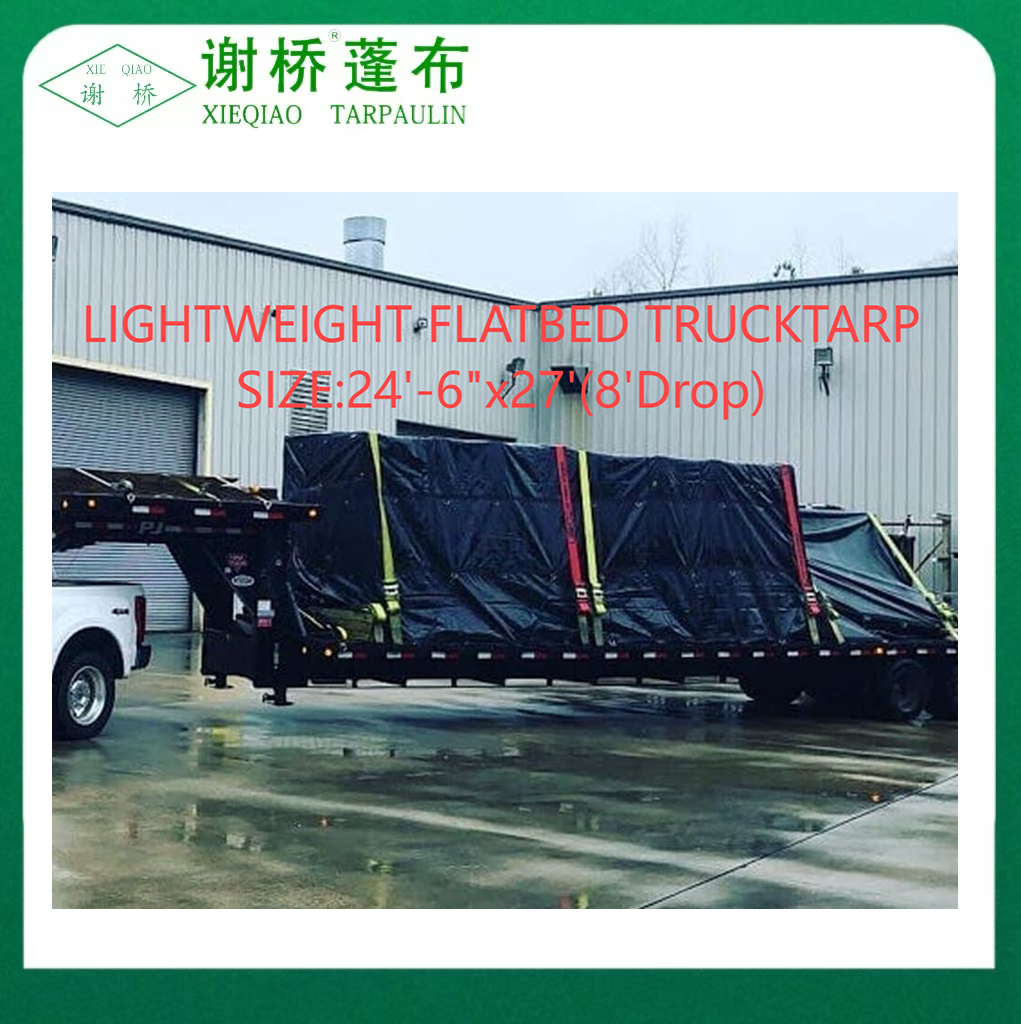
For fleets and logistics operations, PVC-coated polyester is the standard for truck side curtains, flatbed tarps, and open-top container covers because it is strong, weldable, and taut over long spans. The side curtain truck tarpaulin line includes rolling curtains from 9.55 m to 16.5 m, and the open-top container tarps are cut and welded to container dimensions such as 5720 x 3360 mm. These parts stay tensioned by straps and rails, so the fabric must hold its dimensions without sagging.
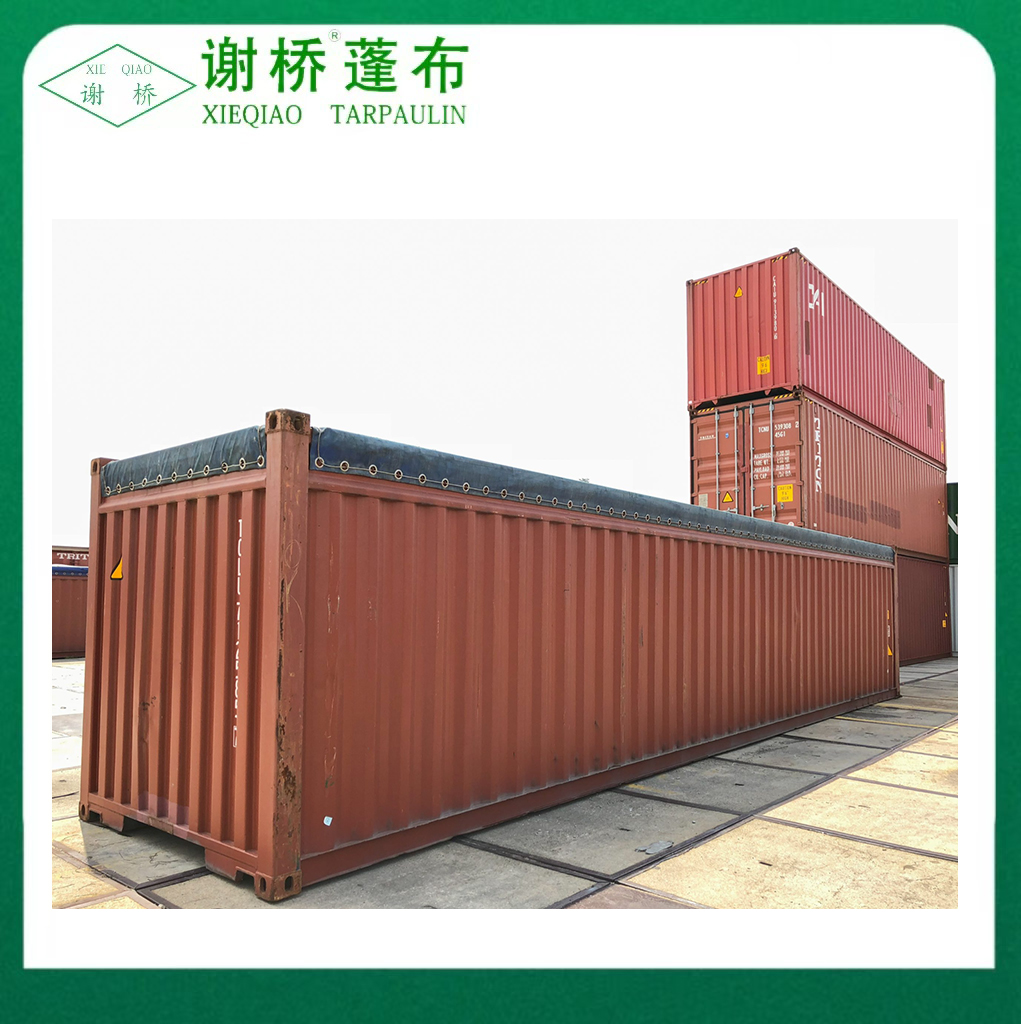 Open Top Container Tarp Manufacturers, Open Top Container Tarpaulin Cover CustomAs China Custom Open Top Container Tarp Manufacturers and Open Top Container Tarpaulin Cover Company, XieQiao Tarpaulin offer Custom Open...View Product →
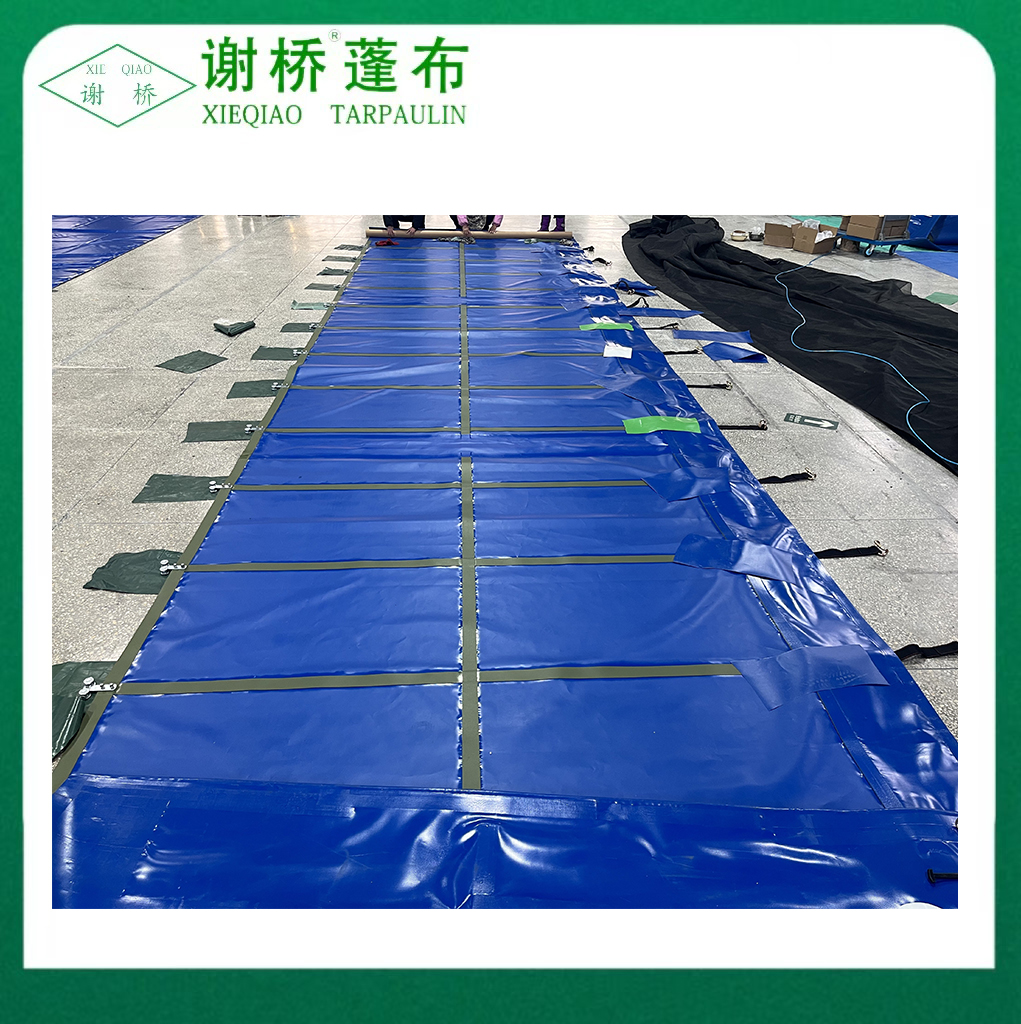 Side Curtain Truck Tarps Manufacturers, Side Curtain Truck Tarps CompanyAs China Custom Side Curtain Truck Tarps Manufacturers and Side Curtain Truck Tarps Company, XieQiao Tarpaulin Supply custom Side Curtain...View Product →
Where sparks, welding, or building code requirements exist, flame-retardant PVC coatings are available. The fire-resistant tarpaulin range is tested against recognized standards, and heavy-duty 13 oz (450 g/m²) fire-resistant welding curtains shield workers from sparks and radiant heat while remaining flexible enough to install around equipment. On construction sites, fire-rated PVC-coated polyester scaffold sheets provide the same protection on a larger scale.
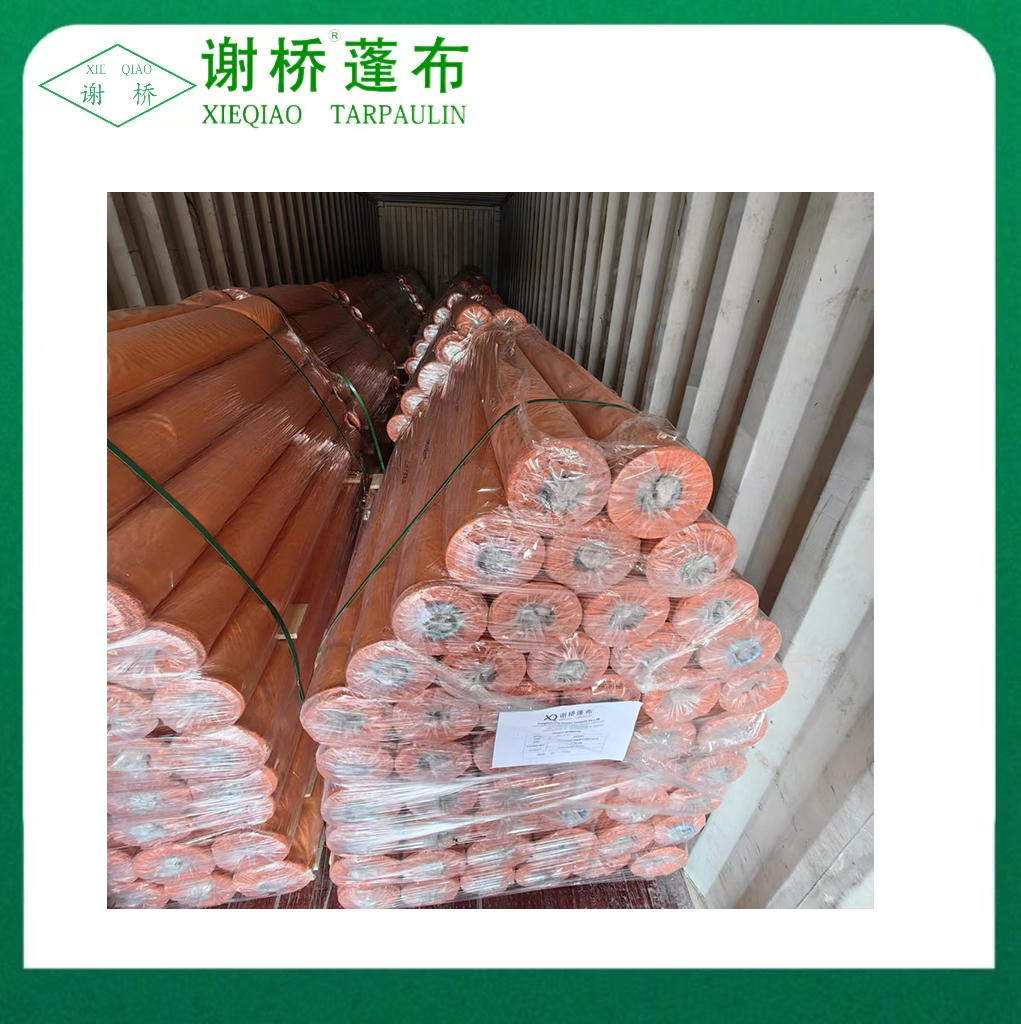 Fire Retardant Tarp Manufacturers, Fire Resistant Tarpaulin CompanyAs China Custom Fire Retardant Tarp Manufacturers and Fire Resistant Tarpaulin Company, XieQiao Tarpaulin Custom Flame Retardant Tarps, F...View Product →
Total weight is the sum of the polyester base and both PVC coatings. Two rolls at the same total weight can differ in base fabric strength and coating thickness. If a membrane must carry load, the base fabric weight matters; if the priority is abrasion or chemical resistance, coating thickness matters. Ask for the base fabric weight, the coating weight per side, and the plasticizer content in the PVC.
A tensile fabric is only as strong as its seams. For membranes used in tension, heat-welded seams are more consistent than stitched seams because they create no needle holes that can wick water or start tears. Full-width welding, reinforced hems, and Keder or rope edges extend the service life. Check how the supplier welds heavier grades such as 13 oz or 450 g/m² fabric and how edge reinforcement is applied at grommet points.
Good suppliers cut and weld fabric to a drawing rather than forcing a stock rectangle onto a steel frame. That includes custom shapes, hemming, grommet spacing, and corner reinforcements that match the frame geometry. If a project involves a building permit or insurance inspection, ask for the actual test report, such as NFPA 701 for flame spread, instead of accepting a marketing claim.
PVC-coated polyester tensile fabric is the right answer for most tensioned covers and structures because it balances strength, price, weldability, and lifespan. A membrane that performs poorly is usually not "PVC-coated polyester" in general, but a thin coating, a weak base fabric, poor adhesion, or the wrong cold-crack grade. Define the load, the climate, and the fire requirement first, then verify the coating and seam details. When those are correct, a well-specified membrane will hold its tension and stay watertight for many seasons.
Recommended Products



 The Industrial Park of Wuqiao Town, Jiangdu District, Yangzhou City, Jiangsu Province, China.
  +86-15252561063
  +86-15252561063
  [email protected]