Specializing in all kinds of custom tarpaulins Custom Tarpaulin Product Manufacturers

 русский
 Français
News
 Home / News / Industry News / PVC Inflatable Boat Material: Density, Coatings, Fabric Weight & Real-World Selection Tips
  2026.08.27
 Industry News
Content
Before you buy an inflatable boat, the first question is rarely about the hull shape or the valve type. It is about the material. The fabric that makes up the tubes determines how the boat handles UV exposure, abrasion, cold weather, and long-term storage. For most recreational and commercial buyers, PVC inflatable boat material is the default choice—but not all PVC is the same. The difference between a budget tender that degrades after two seasons and a workboat fabric that lasts a decade often comes down to a few measurable specifications.
This guide explains what PVC inflatable boat material actually is, how it is constructed, what the numbers on a spec sheet mean, and how to match the material to your real use case. If you are specifying covers, repair fabric, or replacement tubes, the same principles apply.
PVC, or polyvinyl chloride, is the most widely used material in inflatable boats. It is a synthetic plastic polymer that becomes flexible when combined with plasticizers. In boat construction, PVC is not used as a solid sheet. It is applied as a coating on both sides of a woven fabric base, usually polyester. The result is a composite material that combines the tensile strength of the woven scrim with the airtightness, abrasion resistance, and waterproofing of the PVC coating.
The structure of a typical PVC inflatable boat fabric looks like this:
This three-layer construction is why PVC inflatable boat material is often described by two numbers: fabric weight and coating thickness. Both matter, but they matter in different ways.
When a supplier or manufacturer sends you a material specification, you will typically see values such as 1100 dtex, 0.9 mm, or 850 g/m². These are not interchangeable. They describe different properties of the same composite material.
| Specification | Typical Range | What It Affects |
|---|---|---|
| Fabric weight (g/m²) | 500–1500 g/m² | Overall stiffness, puncture resistance, handling weight |
| Coating thickness (mm) | 0.5–1.5 mm | Airtightness, abrasion resistance, weldability |
| Yarn denier / dtex | 500–2000 dtex | Tensile strength, tear propagation resistance |
| Tensile strength (N/5cm) | 2000–7000 N/5cm | Resistance to stretching under air pressure |
| Tear strength (N) | 100–800 N | Resistance to tears spreading after a puncture |
| Cold crack temperature | -20°C to -40°C | Flexibility and crack resistance in cold weather |
Fabric weight is the quickest indicator of material grade. Lightweight PVC fabrics around 500–650 g/m² are common on budget kayaks, pool toys, and low-pressure leisure boats. Mid-range fabrics in the 700–900 g/m² range are typical for recreational tenders, small RIBs, and fishing boats. Heavy-duty PVC fabrics above 1000 g/m² are used on commercial boats, rescue craft, and high-pressure RIB tubes.
The denier of the polyester scrim tells you how thick the individual yarns are. A higher denier means stronger yarns, which translates into higher tensile and tear strength. But a heavier scrim also makes the fabric stiffer and harder to fold. For a boat that you pack into a car trunk, a balance between strength and packability is more important than maximum toughness.
Coating thickness is measured in millimeters and refers to the PVC layer on each side of the scrim. Thicker coatings improve airtightness, abrasion resistance, and weld strength. They also add weight and stiffness. A 0.9 mm coating is a common specification for recreational RIBs because it provides good durability without making the tubes too rigid. Commercial-grade fabrics often use 1.2 mm or thicker coatings.
Do not rely on total material thickness alone. Some manufacturers measure the full composite thickness including the scrim, which can be misleading. Always ask for the coating thickness per side or the total fabric weight to compare apples to apples.
PVC is the market default, but it is not the only option. Hypalon (often used generically for neoprene-based fabrics) and TPU (thermoplastic polyurethane) are the two main alternatives. Understanding the trade-offs helps you decide whether PVC is the right material for your boat, or whether you should pay more for something else.
PVC inflatable boat material is affordable, widely available, and easy to weld using high-frequency or hot-air welding. It holds air well, resists abrasion better than most people expect, and can be manufactured in a wide range of colors and finishes. Its main weakness is UV resistance. Unprotected PVC will degrade over time when exposed to strong sunlight. Manufacturers counter this with UV stabilizers in the coating, but no PVC is truly UV-proof.
For most users—day boaters, anglers, yacht tenders, rental fleets—PVC offers the best balance of cost and durability. A good quality PVC boat with proper care lasts several seasons to a decade-plus.
Hypalon-type fabrics are valued for their excellent UV resistance, chemical resistance, and long service life. They remain flexible in cold weather and do not become brittle as quickly as PVC. However, they are significantly more expensive, harder to weld (usually requiring adhesive bonding), and less widely available. Hypalon tubes are commonly found on high-end commercial RIBs and military boats where longevity outranks cost.
TPU is lighter, stronger in terms of tear resistance, and more environmentally friendly than PVC because it does not require plasticizers. It performs well in cold temperatures and is becoming popular in premium lightweight kayaks and packrafts. The trade-off is price—TPU is more expensive than PVC—and repair complexity. TPU also demands careful handling to avoid delamination.
For the majority of recreational and light commercial buyers, PVC remains the pragmatic choice. The key is to choose the right grade of PVC, not to switch to a different material family altogether.
Two environmental factors ruin inflatable boats faster than anything else: sun and cold. Both are directly influenced by the material formulation, not just the fabric weight.
UV radiation breaks down the polymer chains in PVC, causing the material to become stiff, discolored, and eventually cracked. Reputable manufacturers add UV absorbers and stabilizers to the PVC coating. The problem is that UV resistance is rarely stated as a hard number on a spec sheet. Some manufacturers reference UV dosage in hours, but there is no universal standard.
A practical approach is to look for material that is explicitly marketed as UV-resistant for marine use, and to assume that all PVC will degrade eventually. Low-shrinkage UV-stabilized PVC tarpaulin gives you a sense of how manufacturers specify UV performance in coating formulations. For boat tubes, you want the same attention to UV stabilization in the topcoat.
Cold-crack temperature is the lowest temperature at which the material can be flexed or impacted without cracking. Standard PVC may crack at around -10°C to -20°C. Cold-resistant formulations, such as cold-crack-resistant PVC with polyester coating rated to -40°C, use special plasticizers that keep the material flexible in freezing conditions.
If you boat in northern climates, store your boat in an unheated garage, or plan to use it in early spring and late autumn, a lower cold-crack temperature is not a luxury—it is a necessity. Folding a stiff PVC tube at -15°C can create micro-cracks that later become air leaks.
| Material Type | UV Resistance | Cold-Crack Performance | Relative Cost |
|---|---|---|---|
| Standard PVC | Moderate | Around -10°C to -20°C | Low |
| UV-stabilized PVC | Good | Around -20°C | Low to mid |
| Cold-resistant PVC | Good | -30°C to -40°C | Mid |
| Hypalon / Neoprene | Excellent | Excellent | High |
| TPU | Good to excellent | Excellent | High |
Even the best PVC fabric will fail early if it is poorly welded or attached to low-quality hardware. The material is only one part of the system.
High-frequency welding, also called RF welding, is the dominant method for joining PVC fabrics. It heats the PVC molecules from the inside, creating a homogeneous bond that is nearly as strong as the base material. Hot-air welding is also used for long seams. The key is to verify that the weld width is adequate and that the weld area is free of air pockets and contamination.
Good welding does not just join two pieces of PVC—it fuses them into one continuous material. That is why welded PVC tubes are generally more reliable than glued or stitched alternatives.
Valves are the most common source of slow leaks in inflatable boats. A quality valve must sit flush in the tube, have a wide flange for welding, and use reliable sealing components. Seams, meanwhile, should be reinforced at stress points such as the bow, transom attachment, and lifting handles.
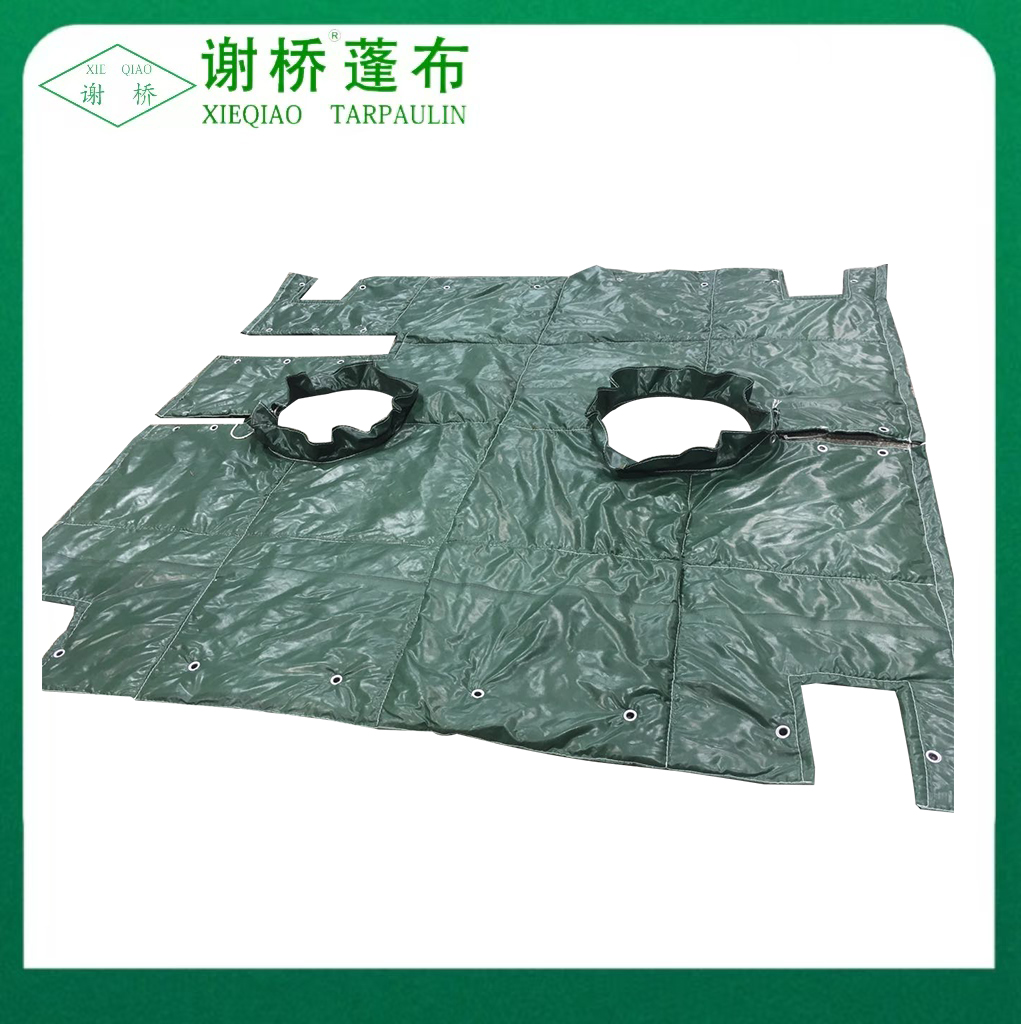
If you are spec'ing a material for covers, repair patches, or custom fabric components, the same quality logic applies. Look for reinforced edges, double-welded seams, and corrosion-resistant grommets. For example, a reinforced-edge waterproof boat cover made from marine-grade PVC will protect the boat far better than a thin cover with single stitching.
Material selection is not about finding the "best" fabric in absolute terms. It is about finding the right fabric for how you actually use the boat.
If you use your inflatable as a yacht tender, a small fishing boat, or a beach toy, you need a material that is lightweight, easy to fold, and affordable. A PVC fabric in the 650–850 g/m² range with a 0.6–0.9 mm coating is typically sufficient. Prioritize UV resistance if the boat will sit on deck under the sun for long periods.
Rigid inflatable boats use higher air pressure, which places more stress on the tube fabric. The material must be stiffer and stronger to maintain its shape at 0.8–1.0 bar. Look for PVC fabrics around 900–1100 g/m² with a 0.9–1.2 mm coating. High-frequency welded seams are essential at these pressures.
Commercial-use inflatables operate daily in demanding conditions. Expect abrasion on beaching, UV exposure, frequent folding, and occasional impacts. Heavy-duty PVC in the 1100 g/m² range or higher, with thick coatings and reinforced stress points, is the minimum sensible specification. If the budget allows, Hypalon or TPU may deliver longer service life, but a quality heavy-duty PVC boat will still provide many years of reliable service.
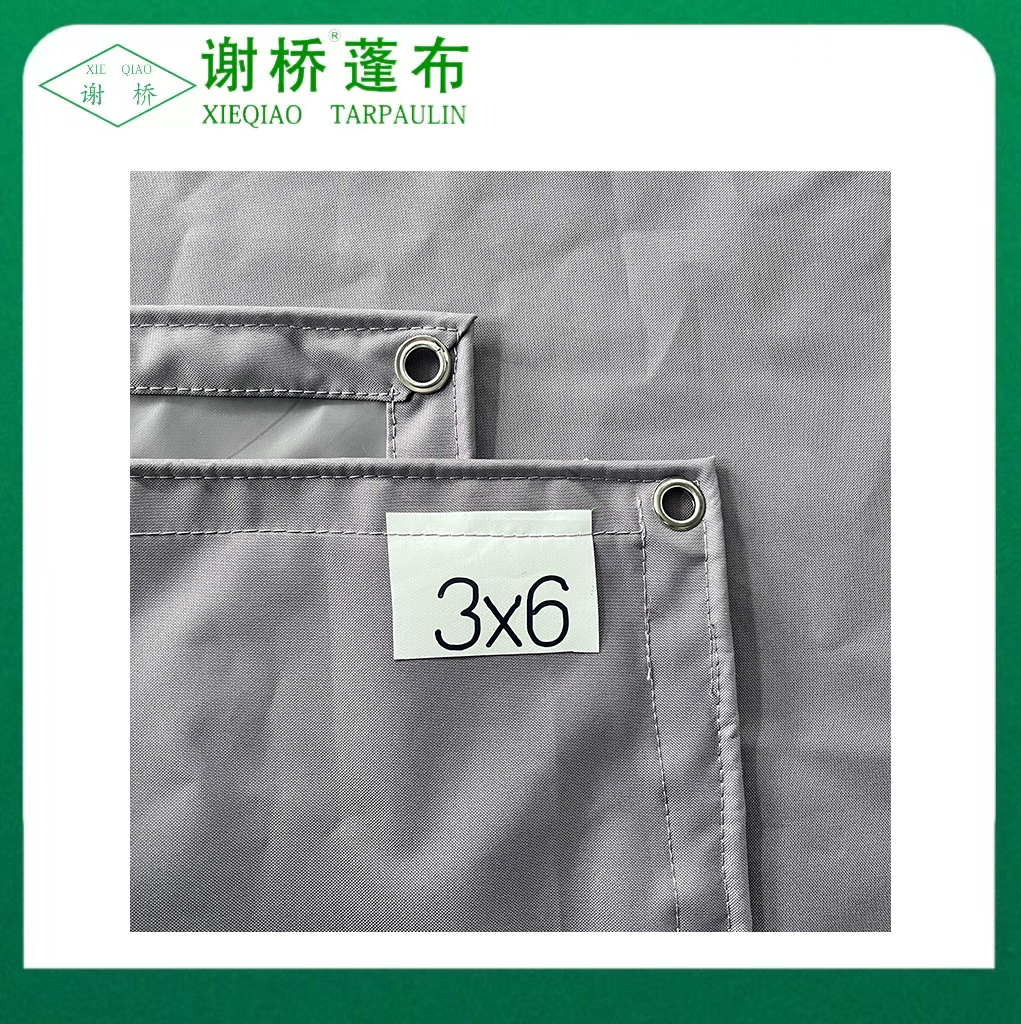
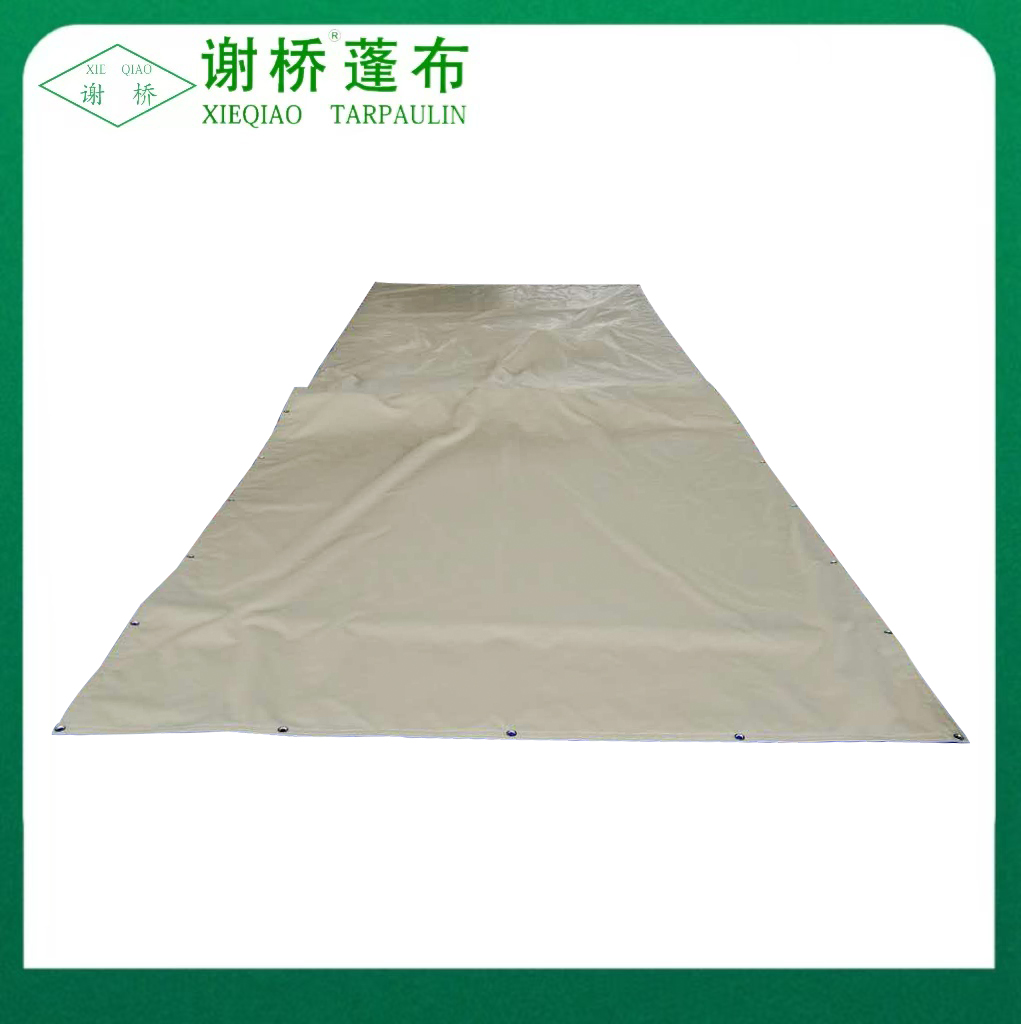
Boat material is not only about the boat itself. A PVC inflatable boat also needs protection when it is not in the water. A covered inflatable stored outdoors will degrade far more slowly than one left exposed. Heavy-duty waterproof tarps and dedicated industrial-grade boat vinyl tarps are manufacturing-grade solutions for protecting inflatable boats during off-season storage. These are built from the same PVC-coated fabrics used in commercial tarpaulin applications, so they offer a higher level of protection than a typical camping tarp.
Some boat owners also use flexible PVC sheeting as an internal repair material for small punctures and seam leaks. Always match the repair patch material to the boat's original fabric weight and coating type to ensure the weld or adhesive bond is compatible.
Not every PVC inflatable boat material is manufactured to the same standard. These issues are worth checking before you commit to a purchase.
When you request a quote for boat material, covers, or replacement tubes, ask for a physical sample. Fold it, stretch it, scratch the surface, and look at the cut edge to see the coating thickness. This simple inspection tells you more than any datasheet.
Correct maintenance extends the life of PVC inflatable boat material significantly. The steps are straightforward but often ignored.
Rinse the boat with fresh water after every saltwater use. Use a mild soap and a soft sponge to remove dirt, algae, and stains. Avoid abrasive cleaners, solvents, and high-pressure washers, which can remove the coating and weaken the fabric.
Even UV-stabilized PVC will last longer if you minimize sun exposure. Keep the boat covered when not in use. If you store it inflated on a boat deck, use a UV-resistant boat cover. Some owners apply a UV protectant spray designed for PVC; these can help, but they are not a substitute for shade.
Deflate the boat partially or fully for long-term storage. Fold it loosely rather than tightly packing it, because sharp creases stress the coating. Store it in a cool, dry place away from direct sunlight and rodent access. If you are storing the boat in a garage or shed during winter, ensure the material's cold-crack rating matches the lowest expected temperature.
Small punctures in PVC material can be repaired with a patch kit using a suitable glue or welding process. Always clean the repair area thoroughly, roughen the surface slightly, and apply the patch with enough pressure to create a full bond. For larger tears or seam failures, consult a professional so the repair does not compromise the tube's structural integrity.
For most buyers, the best PVC inflatable boat material is a mid-to-heavyweight fabric in the 850–1100 g/m² range with a UV-stabilized coating and a cold-crack rating appropriate for your local climate. This balance of weight, strength, and cost will serve the majority of recreational and light commercial users well. If you boat in extreme conditions or need maximum longevity, upgrade to a heavier commercial PVC or consider TPU/Hypalon.
The golden rule is to treat the material specification as a buying criterion, not a footnote. Ask for numbers, request samples, and inspect the welding quality. A boat made from a well-specified PVC fabric will outlast a boat made from "premium" material that is poorly manufactured. The material matters—but the specification and workmanship matter just as much.
Recommended Products



 The Industrial Park of Wuqiao Town, Jiangdu District, Yangzhou City, Jiangsu Province, China.
  +86-15252561063
  +86-15252561063
  [email protected]