Specializing in all kinds of custom tarpaulins Custom Tarpaulin Product Manufacturers

 русский
 Français
News
 Home / News / Industry News / What Are Black Mesh Tarps Best Used For and How Do You Choose the Right One?
  2026.06.11
 Industry News
Content
Black mesh tarps occupy a specific and practical niche in the tarp market that solid covers simply cannot fill. While a standard solid tarp blocks everything — light, air, debris, and moisture — a mesh tarp is engineered with a woven open structure that allows airflow and partial light transmission while still providing meaningful protection and containment. The black color in particular is not just aesthetic. UV-stabilized black polyethylene mesh resists degradation from sunlight more effectively than lighter colors, which makes it the preferred choice for long-term outdoor applications. Understanding the physical properties of black mesh tarps is the first step toward using them correctly and getting real value from them.
The open weave of a mesh tarp is measured as a shade percentage, which indicates how much sunlight the fabric blocks. Black mesh tarps are typically available in shade ratings ranging from 30% to 90%, and the right rating depends entirely on the intended use. A 30% mesh tarp cuts wind load significantly while still allowing substantial light through — useful for truck beds and debris containment. A 70% to 90% shade cloth mesh tarp is designed for plant protection or privacy screening, blocking most direct sunlight while still permitting air circulation that solid tarps prevent.
Black mesh tarps are used across a surprisingly wide range of industries and applications. Their combination of breathability, durability, and UV resistance makes them suitable for tasks where solid covers would create problems — primarily wind resistance, moisture buildup, and heat trapping.
One of the most common applications for black mesh tarps is covering open truck beds and flatbed trailers carrying loose materials such as gravel, mulch, sand, or construction debris. Most jurisdictions require that transported materials be secured to prevent road hazards, and mesh tarps satisfy this requirement while reducing wind resistance during transit. A solid tarp on a loaded flatbed at highway speeds can act like a sail, putting strain on tie-down points and the tarp itself. A mesh tarp deflects wind while still keeping the load contained. Heavy-duty black mesh tarps rated for trucking use typically feature reinforced edges, double-stitched hems, and rust-resistant brass grommets spaced at regular intervals for secure tie-down.
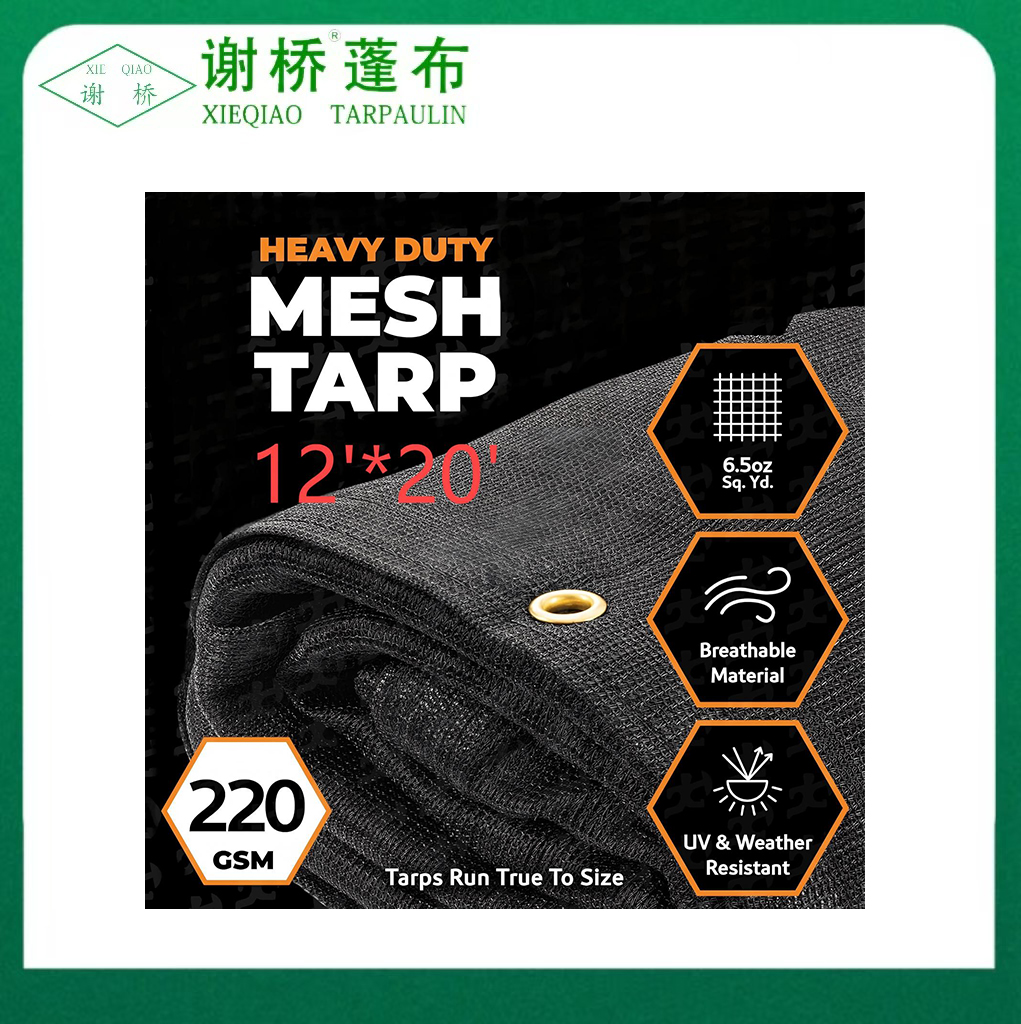
Black shade cloth mesh tarps are essential tools in commercial and home growing operations. They're suspended above crops, seedlings, or nursery stock to reduce solar radiation and heat stress during peak summer months. Certain crops — particularly leafy greens, ferns, orchids, and shade-loving perennials — require filtered light to thrive, and black mesh tarps with 50% to 80% shade ratings provide the right growing conditions. Beyond light management, mesh tarps in agricultural settings also protect plants from hail, birds, and wind damage without creating the humidity and fungal growth problems associated with solid covers.
On construction sites, black mesh tarps are used for debris containment on scaffolding, safety screening around perimeters, and dust control barriers. Their mesh construction allows wind to pass through, which is critical on scaffolding — a solid cover in a high-wind area can become structurally dangerous, while a mesh tarp maintains safety screening without creating hazardous pressure on the frame. They're also draped over dumpsters and waste containers to prevent lightweight debris from blowing off site, satisfying local ordinance requirements without impeding waste disposal operations.
Black mesh tarps with higher shade ratings — typically 80% to 90% — are widely used as privacy screens along chain-link fences, temporary construction barriers, and pool enclosures. The dark color reduces visibility from the outside more effectively than lighter mesh, creating a visual barrier without completely sealing off airflow. This makes them particularly useful in residential settings along boundary fences, on balconies, or around outdoor living areas where privacy is desired without the cost of permanent fencing or solid paneling.
Not all black mesh tarps are manufactured to the same standard. Several technical specifications directly affect how a tarp performs and how long it lasts in real-world conditions. Here is a breakdown of the most important factors to evaluate.
| Specification | What It Means | Recommended Range |
| Shade rating | Percentage of sunlight blocked | 30%–90% depending on use |
| Material weight (GSM) | Grams per square meter; heavier = more durable | 100–200 GSM for heavy-duty use |
| UV stabilization | Resistance to UV degradation | Minimum 3–5 year UV rating |
| Grommet spacing | Distance between tie-down points | Every 30–60 cm on edges |
| Edge reinforcement | Hem and border stitching strength | Double-stitched or rope-reinforced hem |
| Grommet material | Rust resistance for outdoor use | Aluminum or brass, not steel |
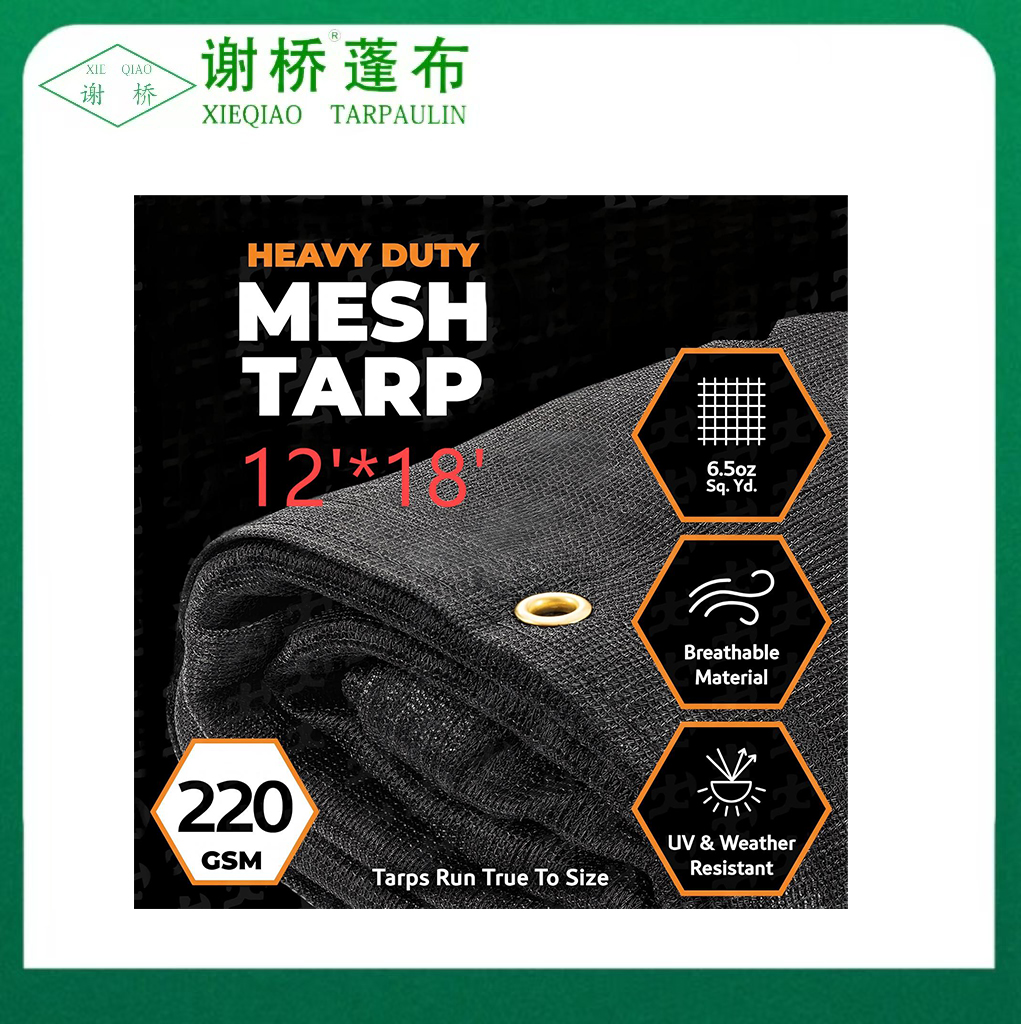
GSM — grams per square meter — is one of the most reliable indicators of tarp quality. Budget mesh tarps often fall in the 80–100 GSM range, which is adequate for short-term seasonal use but tends to fray, tear, and degrade faster under sustained load or prolonged UV exposure. For trucking, construction, or permanent shade installations, tarps in the 150–200 GSM range offer significantly longer service life and hold up better under tension.
Even a high-quality black mesh tarp will fail prematurely if it's improperly installed. The most common failure point is the grommet — specifically, concentration of stress on too few tie-down points, which causes grommets to tear through the hem. Distributing attachment points evenly across the entire perimeter of the tarp is the single most important installation principle.
Black mesh tarps are inherently lower-maintenance than solid tarps because their open weave prevents water pooling and allows air circulation that resists mold and mildew growth. However, they still benefit from basic care practices that significantly extend their usable life.
When removing a mesh tarp from an outdoor installation, shake out any accumulated debris before folding. Dirt, grit, and organic matter trapped in the weave act as abrasives during storage and can degrade the fabric from within. If the tarp is visibly soiled, rinse it with a garden hose and mild soap, then allow it to dry completely before folding and storing. Storing a damp tarp — even a mesh one — in a closed bag or confined space long enough will eventually promote mildew growth along the threads.
For storage, roll rather than fold the tarp when possible. Repeated folding along the same crease lines weakens the fabric at those points over time. Rolling distributes stress evenly across the material. Store in a cool, dry location away from direct sunlight — even UV-stabilized mesh will degrade faster if stored in direct sun between uses. A breathable storage bag or loosely tied roll stored in a garage or shed is ideal.
Sizing a black mesh tarp correctly requires accounting for overhang or overlap on all sides of the coverage area. For a truck bed, measure the full interior length and width and add at least 30 cm per side to allow for secure tie-down without stretching the tarp beyond its edge reinforcement. For agricultural shade structures, measure the full canopy frame area and add enough on each side to attach the tarp to the frame without tension.
Shade percentage selection should be matched to the application's specific requirements rather than defaulting to the highest available rating. For trucking and debris containment, a 30% to 50% shade mesh provides wind load reduction and containment without significantly impairing visibility or adding unnecessary weight. For plant protection in full-sun environments, 50% to 70% is appropriate for most vegetables and flowering plants. For delicate shade plants, ferns, orchids, or nursery seedlings, 70% to 90% provides the low-light conditions these plants require. For privacy fencing, 80% to 90% shade delivers a near-opaque visual barrier while the dark color ensures maximum effectiveness even in bright daylight conditions.
Recommended Products



 The Industrial Park of Wuqiao Town, Jiangdu District, Yangzhou City, Jiangsu Province, China.
  +86-15252561063
  +86-15252561063
  [email protected]