Specializing in all kinds of custom tarpaulins Custom Tarpaulin Product Manufacturers

 русский
 Français
News
 Home / News / Industry News / How Does a Truck Tarpaulin Affect Your Cargo — and What Makes One Built to Last?
  2026.03.27
 Industry News
Content
A truck tarpaulin is far more than a sheet of fabric thrown over a load. It is the primary barrier between transported cargo and every environmental and mechanical threat encountered on the road. Whether hauling construction materials across a region or delivering agricultural goods through unpredictable weather, the quality and condition of a truck tarpaulin directly determines whether cargo arrives intact, undamaged, and commercially viable. Understanding exactly how tarpaulins affect cargo — and what separates a durable cover from one that fails prematurely — is essential knowledge for fleet operators, owner-drivers, and logistics managers alike.
The relationship between a tarpaulin and the cargo it covers is active, not passive. A tarpaulin manages moisture, absorbs mechanical stress, deflects debris, and — when functioning correctly — creates a stable microenvironment around the load that minimises the risk of damage from departure to destination.
Water is the most common cause of cargo damage in road freight. Rain, road spray, condensation, and standing water at loading bays can penetrate a poorly sealed or degraded tarpaulin within minutes. The consequences range from surface staining on timber or paper goods to complete structural failure of packaged electronics or corroded metal components. A high-quality tarpaulin with a fully welded or heat-sealed seam construction, combined with a hydrostatic head rating above 1,500 mm, prevents water ingress even under sustained rainfall at highway speeds. Seams stitched rather than welded are a known weak point — thread degrades under UV exposure, and needle holes create direct water pathways through the fabric.
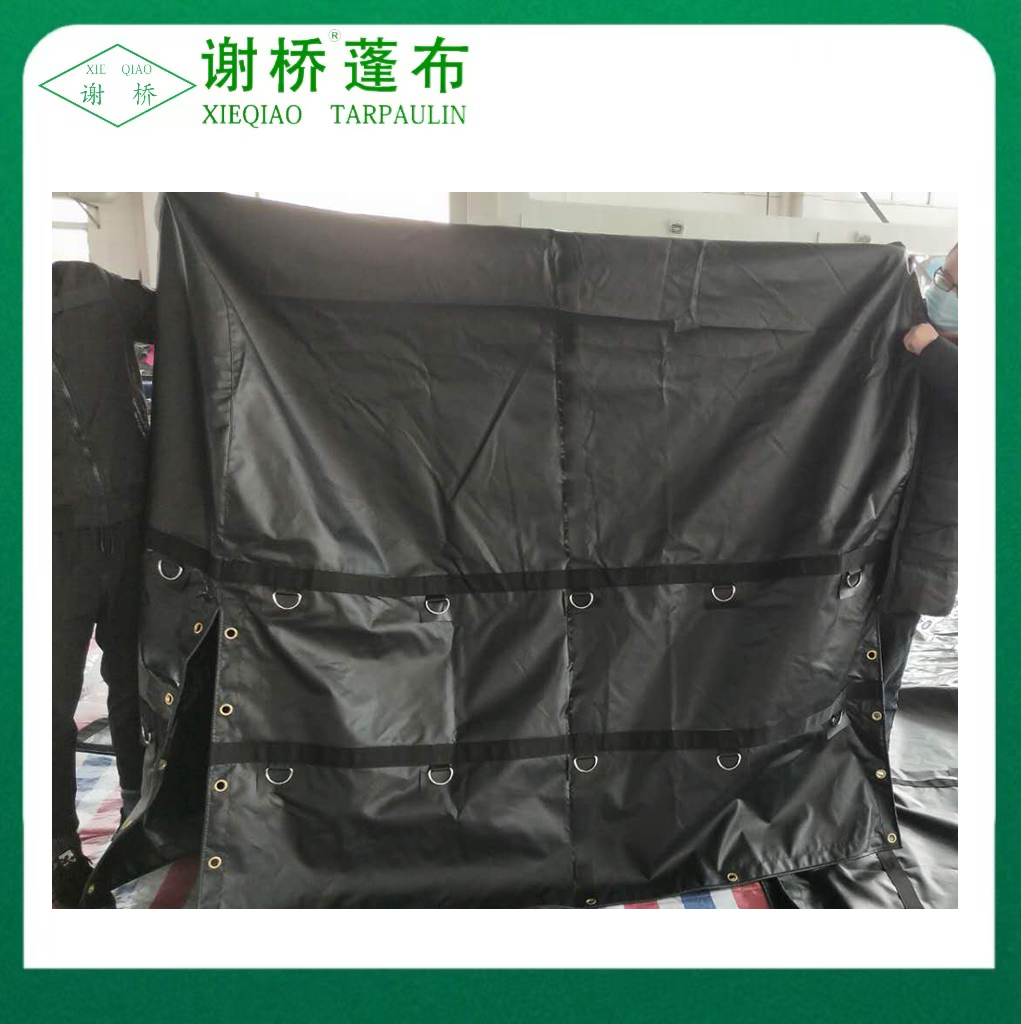
At motorway speeds, a truck tarpaulin is subjected to continuous aerodynamic forces that generate lift, flutter, and lateral stress. A tarpaulin that billows or lifts at the edges creates two problems simultaneously: it exposes cargo to wind-driven rain and debris, and the repetitive mechanical movement fatigues the fabric and fixing points. Cargo subject to sustained wind exposure can shift within the trailer, creating load imbalance and increasing the risk of spillage or vehicle instability. Tarpaulins designed with reinforced perimeter webbing, anti-flutter hems, and tensioned side strapping systems significantly reduce both risks.
Prolonged exposure to direct sunlight inside a poorly ventilated tarpaulin cover can raise the temperature of enclosed cargo by 20–35°C above ambient air temperature. For temperature-sensitive freight — food products, adhesives, certain plastics, or pharmaceuticals — this thermal loading can cause spoilage, deformation, or chemical breakdown. Conversely, in cold climates, a tarpaulin that retains some insulative properties can protect cargo from frost damage during overnight stops. UV radiation also degrades cargo packaging: cardboard weakens, plastic wrap becomes brittle, and labelling fades — all of which create handling and compliance problems at the point of delivery.
Gravel, stones, and debris thrown up from road surfaces, particularly on construction site access roads or poorly maintained rural routes, can strike a tarpaulin at significant velocity. A cover with insufficient tensile strength or tear resistance will develop punctures and splits that compromise the entire load. Beyond direct puncture damage, a tarpaulin in contact with sharp or irregular cargo — steel sections, timber with protruding fixings, aggregate with angular edges — is subject to abrasion from within. Tarpaulins constructed from high-tenacity polyester or reinforced PVC laminate handle these stresses substantially better than lightweight alternatives.
Durability in a truck tarpaulin is not a single property — it is the result of several material and construction characteristics working together under real operating conditions. A tarpaulin rated for high tensile strength but with poor UV stabilisation will fail prematurely in the same way one with excellent UV resistance but inadequate seam construction will leak. Evaluating durability requires looking at the complete picture.
The weight of the base fabric — measured in grams per square metre (GSM) — is a reliable indicator of load-bearing capacity and resistance to tearing. For heavy-duty truck applications, tarpaulins with a finished weight of 650 GSM to 900 GSM are considered standard. Below 500 GSM, materials are generally suited only to light goods or short-haul applications where mechanical stress is limited. The fabric weave matters equally: a tight plain weave with high thread count per centimetre resists stretch and maintains dimensional stability under load, preventing the progressive deformation that causes covers to loosen and lose their protective geometry over time.
Most heavy truck tarpaulins use a PVC-coated polyester construction. The PVC layer provides waterproofing, chemical resistance, and surface durability. Coating thickness directly affects how long a tarpaulin retains these properties: a coating under 0.3 mm will crack and delaminate within two to three years of regular use, while coatings of 0.5 mm or above maintain flexibility and adhesion significantly longer. The quality of the plasticiser used in the PVC compound also matters — cheaper formulations leach plasticiser over time, causing the material to stiffen and crack in cold temperatures. Premium tarpaulins use cold-resistant PVC formulations that remain flexible down to −30°C without embrittlement.
UV degradation is the primary cause of premature tarpaulin failure in outdoor environments. Without adequate UV stabilisers incorporated into the PVC compound and base fabric, materials break down at the molecular level — losing tensile strength, fading in colour, and developing surface chalking that signals structural weakness beneath. A properly UV-stabilised tarpaulin should retain at least 80% of its original tensile strength after 2,000 hours of UV exposure under accelerated weathering tests. Chemical resistance is equally relevant for loads carrying fertilisers, oils, or construction chemicals — tarpaulins formulated with anti-chemical coatings resist surface degradation and maintain waterproofing integrity in contaminated environments.
The material from which a tarpaulin is made accounts for approximately half of its durability — the other half comes from how it is constructed. The following construction elements separate tarpaulins that perform reliably over three to five years from those that deteriorate within a single season.
No single tarpaulin type performs optimally across all cargo and route profiles. Matching the tarpaulin specification to the application protects both the cargo and the investment in the cover itself.
| Tarpaulin type comparison by application suitability and key performance trade-offs | |||
| Tarpaulin Type | Typical GSM | Best Application | Key Limitation |
| PVC-coated polyester | 650–900 | General heavy haulage, flatbed, tipper | Heavier weight; less flexible in cold |
| Polyethylene (PE) woven | 150–300 | Light goods, short-haul, agriculture | Lower durability; limited UV life |
| Canvas (cotton/poly blend) | 400–600 | Breathable loads (timber, grain) | Absorbs moisture; heavy when wet |
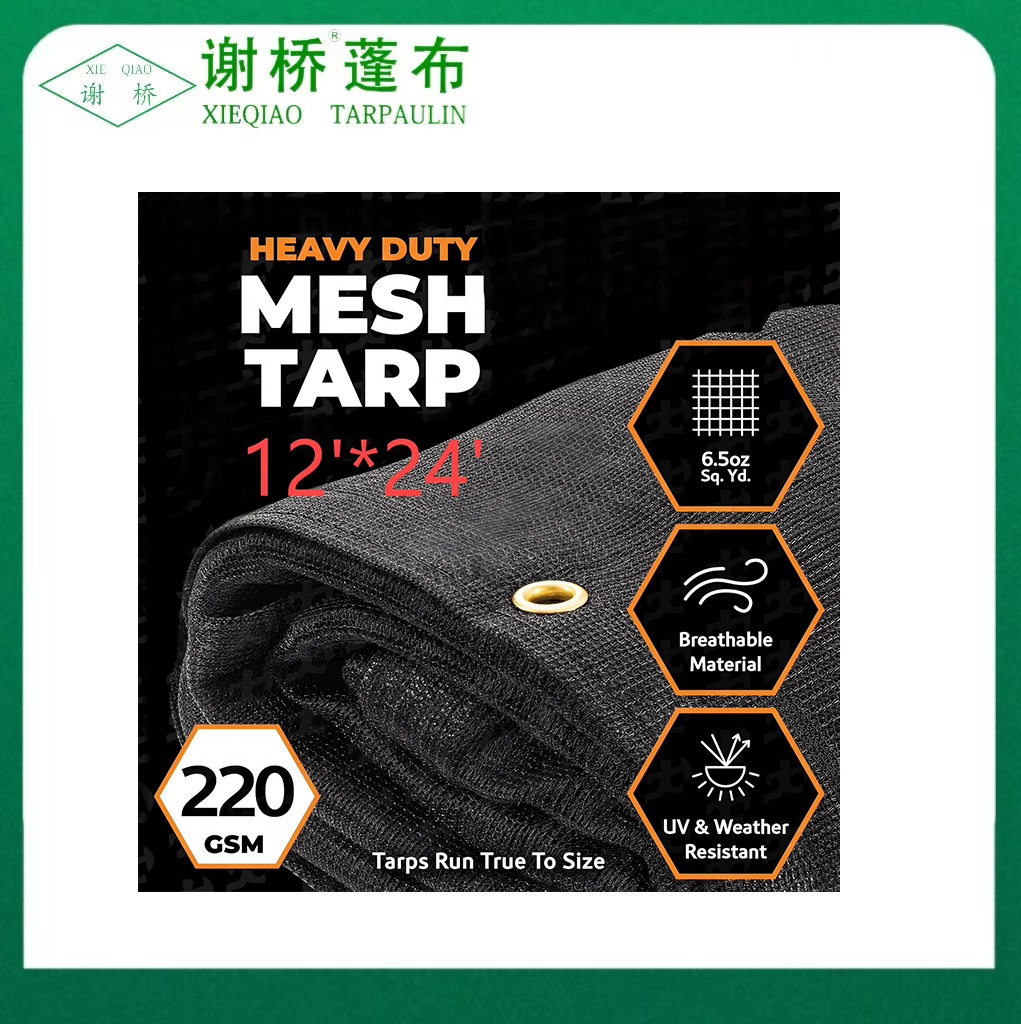
| Mesh tarpaulin | 200–400 | Aggregate, demolition waste, sand | Not waterproof; dust control only |
| Aluminium-laminated PVC | 700–1000 | Temperature-sensitive cargo | Higher cost; less flexible |
Even the highest-specification tarpaulin will deteriorate prematurely under poor maintenance practices. The service life of a quality heavy-duty PVC tarpaulin is typically five to eight years under regular use — but that figure drops to two to three years when basic maintenance is neglected.
Cleaning: Road grime, fuel residue, and chemical deposits should be washed off with a mild detergent and water after every long haul, and certainly before storage. Acidic or solvent-based cleaners degrade PVC coatings rapidly and should never be used. Pressure washing is acceptable at low settings but should not be directed at seams or D-ring attachment points.
Dry before folding: Storing a wet tarpaulin folded over itself accelerates mould growth, which degrades both the PVC surface and the base fabric. Where drying space is limited, loosely rolling rather than tightly folding reduces the trapped moisture environment and the abrasion that tight folds create at crease lines.
Early repair of minor damage: Small tears and punctures repaired immediately with PVC repair patches or cold-weld adhesive cost negligible time and money. Left unattended, a 5 cm tear subjected to continued wind load can propagate across an entire panel in a single journey, rendering the tarpaulin irreparable. Inspecting all seams, D-rings, and corner patches at every load cycle is the single most effective maintenance practice for extending service life.
A truck tarpaulin that is correctly specified, properly maintained, and replaced before degradation reaches a critical point is one of the most cost-effective investments in cargo protection available to any transport operation. The cost of a failed tarpaulin is rarely just the tarpaulin itself — it is the damaged load, the delayed delivery, the insurance claim, and the reputational consequence that follow.
Recommended Products



 The Industrial Park of Wuqiao Town, Jiangdu District, Yangzhou City, Jiangsu Province, China.
  +86-15252561063
  +86-15252561063
  [email protected]