Specializing in all kinds of custom tarpaulins Custom Tarpaulin Product Manufacturers

 русский
 Français
News
 Home / News / Industry News / What Makes an 18oz Coil Truck Tarp the Right Choice for Hauling Heavy Steel Coils?
  2026.05.12
 Industry News
Content
When it comes to protecting steel coils during long-haul flatbed transportation, not just any tarp will do. Steel coils are among the heaviest and most demanding cargo types in the trucking industry, presenting unique challenges in terms of load shape, weight concentration, edge sharpness, and regulatory compliance. An 18oz coil truck tarp is the industry-standard solution engineered specifically for this purpose—built from heavyweight vinyl-coated fabric, reinforced at every stress point, and sized to fully cover the curved profile of coiled steel rolls. This guide covers everything flatbed operators, fleet managers, and owner-operators need to know about 18oz coil tarps: how they are made, what to look for when buying, how to properly secure them, and how to extend their service life.
An 18oz coil truck tarp is a heavy-duty, purpose-built cargo covering designed to protect cylindrical steel coils—such as hot-rolled, cold-rolled, galvanized, or coated steel coils—during flatbed truck transport. The "18oz" designation refers to the weight of the base fabric: 18 ounces per square yard of vinyl-coated polyester or vinyl-laminated woven fabric. This is a significantly heavier specification than the 10oz or 14oz tarps used for lighter, less abrasive cargo types, reflecting the demands imposed by the sharp edges, concentrated weight, and irregular surface geometry of coiled steel.
Coil tarps are distinct from standard lumber tarps or smoke tarps in their shape and construction. Rather than lying flat over a rectangular load, a coil tarp is designed to drape over and around the curved outer surface of one or more steel coils positioned on coil racks or cradles on the flatbed. The tarp must conform closely to the coil's cylindrical shape, extend down the sides of the trailer, and be secured tightly enough to prevent wind lift and cargo exposure during highway driving at speeds of 55–70 mph.
Understanding what goes into an 18oz coil tarp helps operators evaluate quality and compare products accurately. The construction of a high-quality coil tarp involves multiple layers of material engineering and fabrication detail.
The base of an 18oz coil tarp is a tightly woven polyester scrim—a grid of high-tenacity polyester yarns interlocked at right angles. This scrim provides the structural foundation of the tarp, giving it tensile strength in both the warp and weft directions. The scrim is then coated on both sides with PVC (polyvinyl chloride) compound, which provides waterproofing, UV resistance, abrasion resistance, and protection against the chemicals and road debris encountered during transport. The combined weight of the coated fabric reaches 18 ounces per square yard, indicating a substantial PVC coating thickness that significantly enhances puncture and tear resistance compared to lighter-grade tarps.
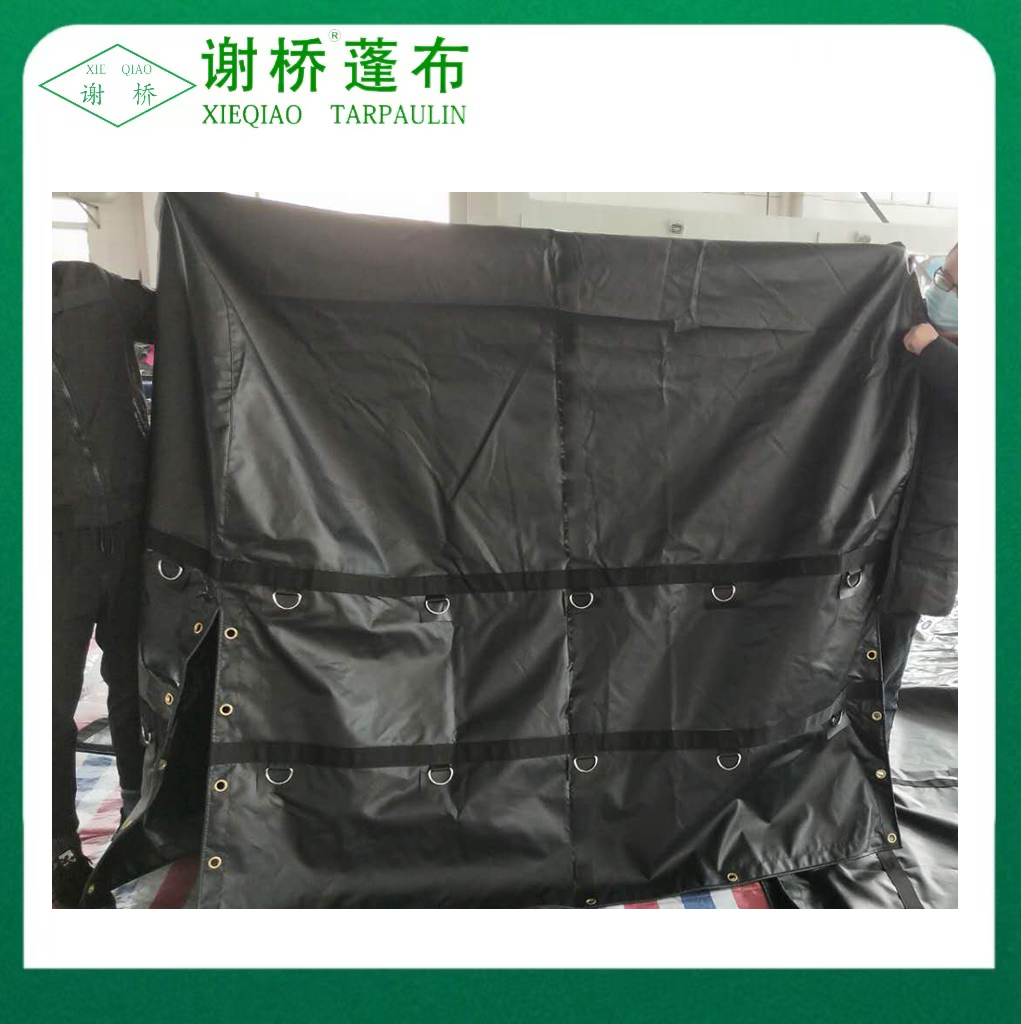
All edges of a quality 18oz coil tarp are folded and double-stitched or heat-welded with reinforcing binding tape—typically a 2-inch or 3-inch wide strip of the same or heavier vinyl fabric. This edge binding prevents the primary coated fabric from fraying, tearing at the hem, or delaminating at the perimeter where stress concentrations are highest during tie-down operations. The corners receive additional reinforcement, often in the form of sewn-on corner patches of extra-thick vinyl, because corner points experience multi-directional loading when the tarp is stretched and secured.
The tie-down system integrated into the tarp is critical for securing it against wind forces during transit. Most 18oz coil tarps incorporate a combination of the following hardware elements:
Coil tarps are manufactured in a range of standard sizes, but unlike rectangular cargo tarps, the correct size depends on the diameter and width of the coils being hauled as well as the number of coils on the load. The tarp must be long enough to cover the full width of all coils on the trailer and wide enough to drape down both sides of the trailer to the required coverage depth.
| Tarp Size (L × W) | Typical Coil Load Configuration | Trailer Length |
| 6 ft × 8 ft | Single small coil (up to 48" wide) | Any flatbed |
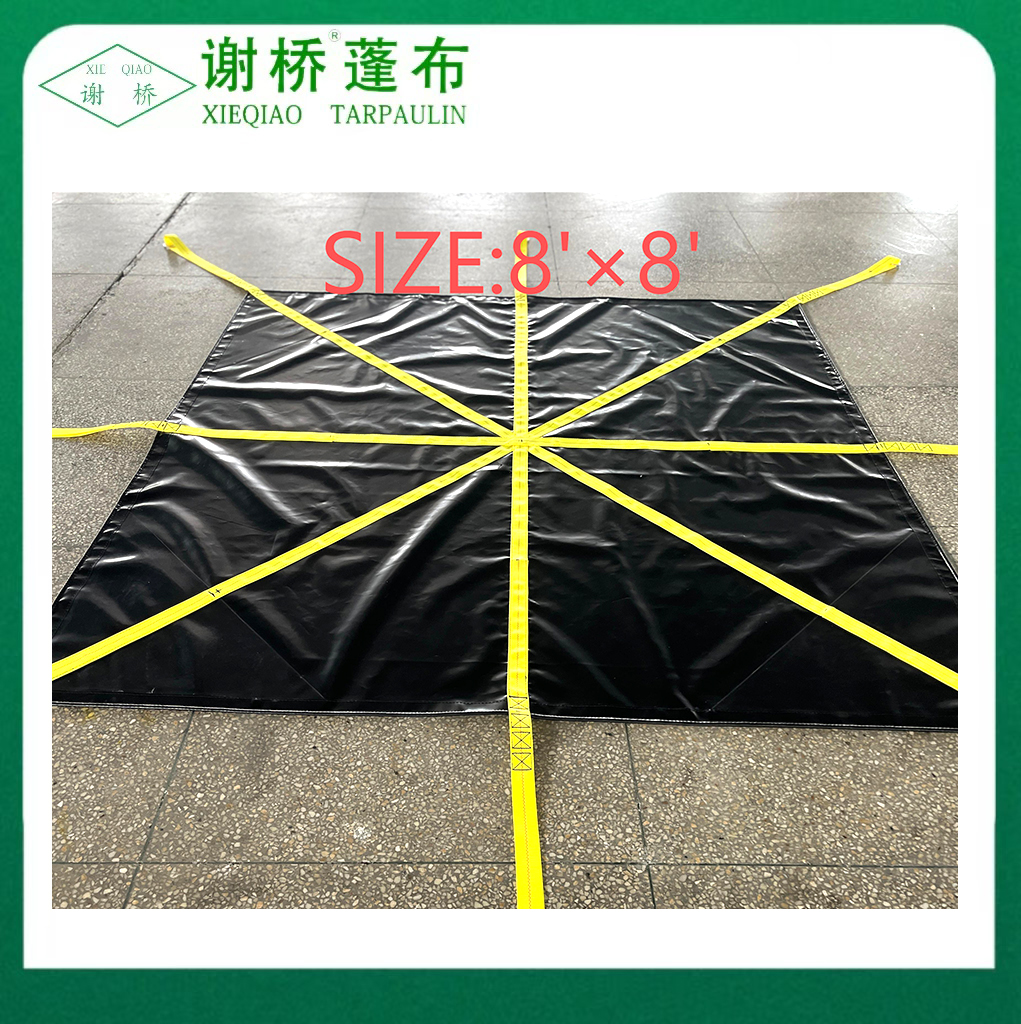
| 8 ft × 8 ft | Single medium coil (up to 60" wide) | Any flatbed |
| 8 ft × 24 ft | Two to three coils in a row | 40–48 ft flatbed |
| 8 ft × 27 ft | Three to four coils in a row | 48–53 ft flatbed |
| 10 ft × 24 ft | Wide coils or two-row configuration | 40–48 ft flatbed |
| Custom sizes | Oversized or specialty coil loads | Per load specification |
To calculate the required tarp width for a single coil load, add the coil diameter (measured vertically when the coil is on its side) plus the required side coverage on each side of the trailer—typically 18–24 inches minimum to allow proper tie-down engagement. For a coil with a 60-inch diameter on a trailer sitting 48 inches off the ground, a tarp width of at least 8 feet is needed to provide adequate side coverage to the trailer frame level.
The choice of 18oz fabric weight for coil tarps is not arbitrary—it reflects the specific damage mechanisms that steel coil loads impose on tarps during transport. Steel coils frequently have sharp outer edges at the coil's axial ends, rough surface scale from the rolling process (in the case of hot-rolled coils), and significant surface hardness. As the tarp drapes over the coil and is tensioned during tie-down, these sharp features impose concentrated point loads and abrasive contact that would quickly wear through or puncture lighter fabric.
Compared to lighter-weight tarps, the 18oz specification provides measurably superior performance across several key properties:
Even the highest-quality 18oz coil tarp will fail prematurely or allow cargo exposure if it is not secured correctly. Proper tarp securing for coil loads follows a systematic sequence that ensures full coverage, even tension distribution, and compliance with DOT cargo securement regulations.
An 18oz coil tarp represents a meaningful equipment investment—quality tarps in this specification typically cost between $150 and $400 depending on size and hardware configuration. Implementing consistent maintenance practices significantly extends service life and delays replacement costs.
In the United States, flatbed cargo—including steel coils—is regulated under FMCSA 49 CFR Part 393, Subpart I, which establishes minimum requirements for cargo securement systems. While the regulations specify requirements for the coil securement hardware (chains, straps, and blocking) rather than the tarp itself, the tarp must not interfere with or substitute for the required cargo securement elements. Some steel mill customers and load receivers specify that arriving loads must show no evidence of weather exposure—a requirement that makes a properly sized, properly secured 18oz coil tarp not merely a best practice but a contractual obligation.
Additionally, several states have laws prohibiting cargo debris from falling onto roadways, and a failed or improperly secured tarp that allows scale, rust flakes, or moisture to exit the load during transit may expose carriers to liability. Maintaining tarps in serviceable condition and securing them correctly before every dispatch is therefore both a safety and a legal compliance imperative for flatbed operators hauling steel coil freight.
The 18oz coil truck tarp is a precisely engineered piece of equipment—not a commodity item—and treating it as such pays dividends in reduced replacement frequency, better cargo protection, and regulatory compliance. By understanding the material construction behind the 18oz specification, selecting the correct tarp dimensions for your typical coil load configurations, following a disciplined securing procedure on every haul, and investing in consistent maintenance, flatbed operators can maximize the return from each tarp and deliver steel coil freight in pristine condition regardless of the weather and road conditions encountered along the route.
Recommended Products



 The Industrial Park of Wuqiao Town, Jiangdu District, Yangzhou City, Jiangsu Province, China.
  +86-15252561063
  +86-15252561063
  [email protected]